









Book-and-Claim Implementation Readiness

Book-and-Claim Implementation Readiness

Book-and-Claim Implementation Readiness

Book-and-Claim Implementation Readiness

Understand when Book and Claim works, what it requires, and how to implement it without creating audit risk or broken allocation logic.

Understand when Book and Claim works, what it requires, and how to implement it without creating audit risk or broken allocation logic.

Trusted by

Trusted by

Trusted by

Trusted by

Use Cases

Use Cases

Where Book-and-Claim Is Used

Where Book-and-Claim Is Used

Where Book-and-Claim Is Used

Book and Claim is used when sustainability attributes need to be transferred across locations, without requiring physical fuel delivery. It becomes relevant when physical supply cannot match demand, but sustainability targets still need to be addressed in a structured and auditable way.

Book and Claim is used when sustainability attributes need to be transferred across locations, without requiring physical fuel delivery. It becomes relevant when physical supply cannot match demand, but sustainability targets still need to be addressed in a structured and auditable way.

Distributed Operations and Limited Supply

• Fuel is not available at every site, but sustainability targets apply across the business.

• Operations span multiple regions with uneven infrastructure and supply access.
• SAF availability is constrained or inconsistent across locations.
• Markets where physical supply chains are still developing.

Corporate Claims and Multi-Party Allocation

Corporate Claims and Multi-Party Allocation

• Sustainability claims are made independently of fuel delivery.

• Certificates are allocated across business units, customers, or partners.

• Scope 3 or corporate targets require flexible attribution of emissions reductions.

• Multiple stakeholders are involved in purchasing, transferring, and claiming certificates.

Proud member of the Roundtable on Sustainable Biomaterials (RSB)

Proud member of the Roundtable on Sustainable Biomaterials (RSB)

What You Need to Implement Book-and-Claim

What You Need to Implement Book-and-Claim

What You Need to Implement Book-and-Claim

What You Need to Implement Book-and-Claim

Production and Certification Data

Book and Claim relies on verified production data at batch level, including feedstock origin and sustainability attributes. This data must align with certification schemes and remain consistent across operations. Without it, certificates cannot be defended under audit.

Production & Verification

Book and Claim relies on verified production data at batch level, including feedstock origin and sustainability attributes. This data must align with certification schemes and remain consistent across operations. Without it, certificates cannot be defended.

Attribute Issuance Logic

Certificates need to be created through clear, consistent rules that link directly to production data. If issuance logic varies across batches or systems, inconsistencies appear quickly and become difficult to reconcile.

Attribute Issuance Logic

Certificates need to be created through clear, consistent rules that link directly to production data. If issuance logic varies across batches or systems, inconsistencies appear quickly and become difficult to reconcile.

Transfer and Allocation Controls

Certificates must be allocated and transferred in a controlled way, with visibility over available and assigned volumes. Without defined allocation logic, over-allocation and duplication become common, especially as volumes increase.

Claim and Retirement Governance

Claims require clear ownership and defined retirement workflows. Each certificate must be retired once used, with a complete record from issuance to claim. This is what determines whether the system holds under audit.

Book-and-Claim Infrastructure Determines Compliance Strength

Book-and-Claim Infrastructure Determines Compliance Strength

Book-and-Claim Infrastructure Determines Compliance Strength

Book-and-Claim Infrastructure Determines Compliance Strength

The model does not fail. Execution does.

The model does not fail. Execution does.

Manual & Disconnected Tracking
  • High administrative burden.

  • Increased reconciliation effort.

  • Limited control over allocation.

  • High audit exposure.

Structured Digital Traceability Infrastructure
Structured Traceability Infrastructure
  • Controlled issuance, transfer, and retirement.

  • Clear allocation logic across counterparties.

  • Real-time visibility of volumes and claims.

  • Audit-ready records at any point in time.

How Fuel Central Supports Book-and-Claim

How Fuel Central Supports Book-and-Claim

How Fuel Central Supports Book-and-Claim

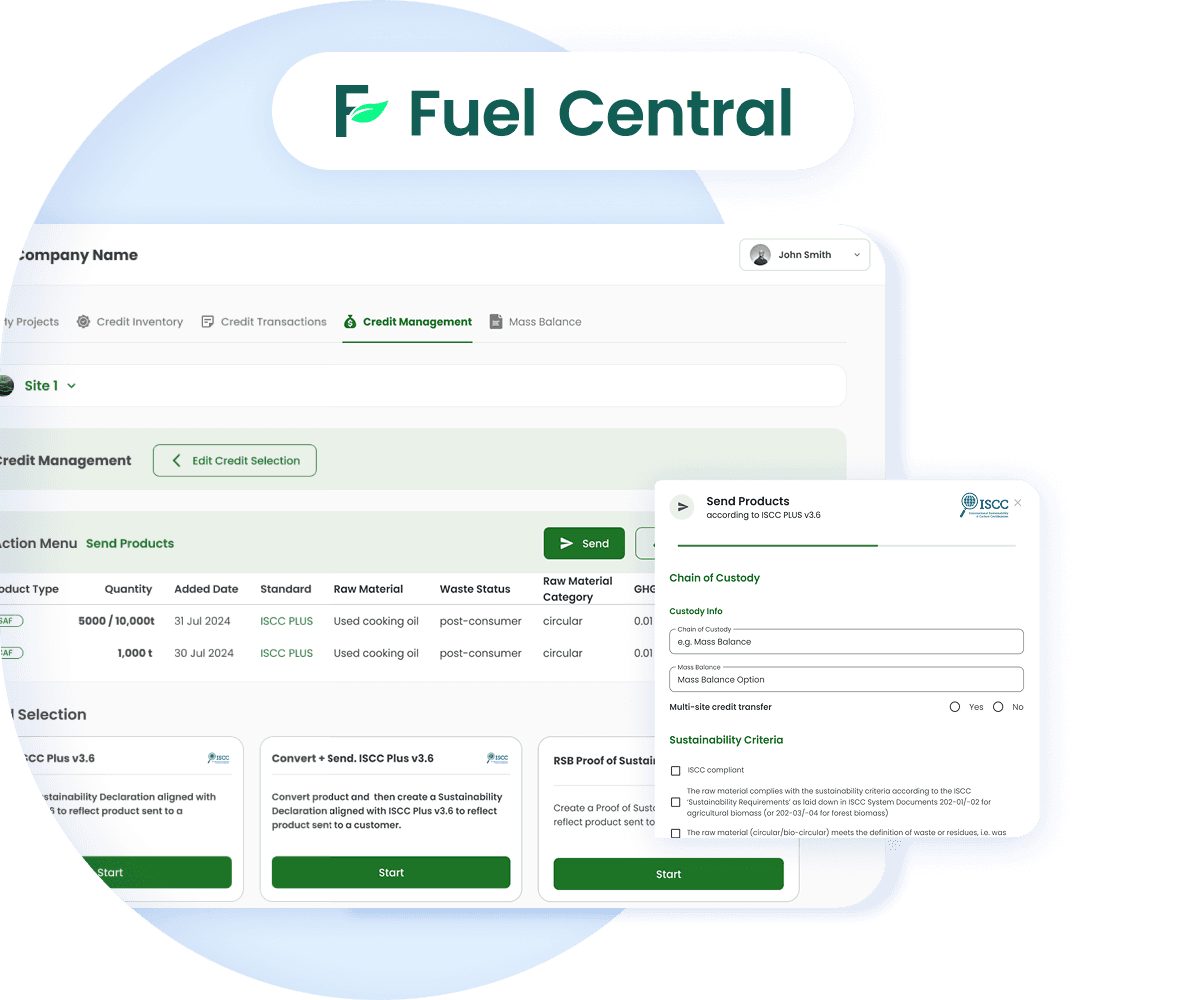
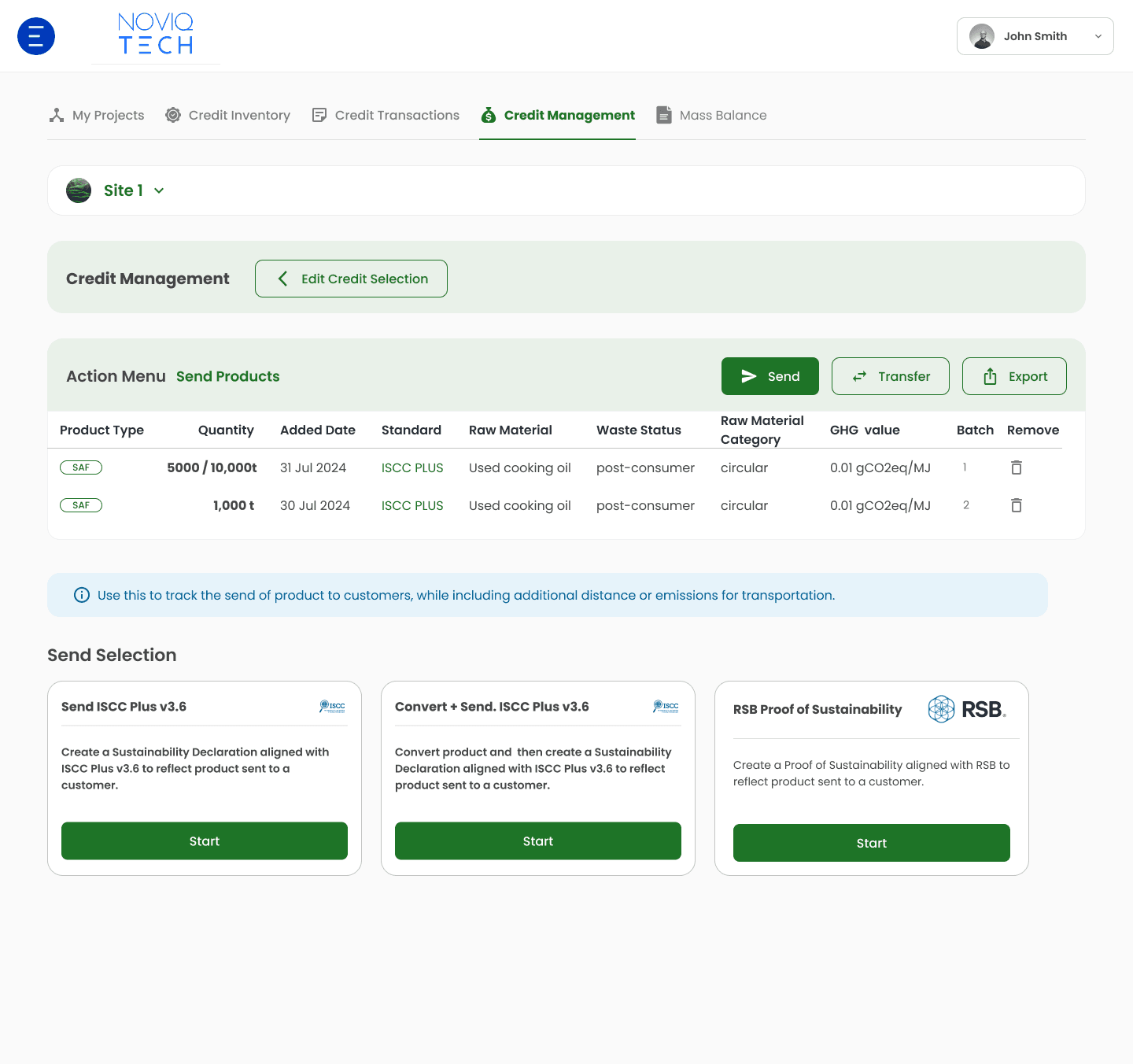
Fuel Central turns Book and Claim into a controlled system, where every certificate is linked to verified data, governed by defined allocation logic, and traceable from issuance through to retirement.


• Every unit is linked to verified production data at batch level.
• Digital certificates represent sustainability attributes with full traceability.
• Certificates are issued and retired on a tamper-resistant ledger.
• Data flows from IoT systems, ERP platforms, and manual inputs into a single structure.


This allows Book and Claim to operate as a controlled system, rather than a disconnected reporting process.

Frequently Asked Questions

Frequently Asked Questions

Frequently Asked Questions

Frequently Asked Questions

What is the difference between mass balance and Book and Claim?

Mass balance and Book and Claim are both chain-of-custody systems, but they operate differently. Mass balance tracks sustainability attributes through a physical supply chain. Sustainable and conventional materials may be mixed, but the volume of certified product leaving the system cannot exceed the certified volume entering it. The environmental attributes stay within the defined supply chain boundaries. Book and Claim separates the sustainability attributes from the physical product entirely. Certificates representing verified environmental benefits can be transferred independently of physical delivery and retired once claimed. Mass balance focuses on physical flow accounting. Book and Claim focuses on attribute accounting. Both require robust data controls and governance to prevent double counting and ensure credibility.

What is the Book and Claim model and how does it work?
How is blockchain used to verify Book and Claim transactions?
What data is required to implement a Book and Claim system?
Should an organisation use mass balance or book and claim?

Mass balance is often preferred when supply chains are geographically integrated and physical traceability is commercially viable. It works well in systems where certified material flows can be monitored within defined operational boundaries. Book and Claim may be more suitable when physical logistics make direct delivery impractical, such as global aviation fuel distribution or cross-border renewable fuel markets. The appropriate model depends on regulatory requirements, buyer expectations, and operational constraints. Some organisations use both mechanisms in parallel across different markets.

How does Book and Claim work in the context of SAF?
How does Book and Claim support Scope 3 emissions reporting?
Why is sustainability attribute certificate retirement important?
What is the difference between mass balance and Book and Claim?

Mass balance and Book and Claim are both chain-of-custody systems, but they operate differently. Mass balance tracks sustainability attributes through a physical supply chain. Sustainable and conventional materials may be mixed, but the volume of certified product leaving the system cannot exceed the certified volume entering it. The environmental attributes stay within the defined supply chain boundaries. Book and Claim separates the sustainability attributes from the physical product entirely. Certificates representing verified environmental benefits can be transferred independently of physical delivery and retired once claimed. Mass balance focuses on physical flow accounting. Book and Claim focuses on attribute accounting. Both require robust data controls and governance to prevent double counting and ensure credibility.

What is the Book and Claim model and how does it work?
How is blockchain used to verify Book and Claim transactions?
What data is required to implement a Book and Claim system?
Should an organisation use mass balance or book and claim?
How does Book and Claim work in the context of SAF?
How does Book and Claim support Scope 3 emissions reporting?
Why is sustainability attribute certificate retirement important?
What is the difference between mass balance and Book and Claim?

Mass balance and Book and Claim are both chain-of-custody systems, but they operate differently. Mass balance tracks sustainability attributes through a physical supply chain. Sustainable and conventional materials may be mixed, but the volume of certified product leaving the system cannot exceed the certified volume entering it. The environmental attributes stay within the defined supply chain boundaries. Book and Claim separates the sustainability attributes from the physical product entirely. Certificates representing verified environmental benefits can be transferred independently of physical delivery and retired once claimed. Mass balance focuses on physical flow accounting. Book and Claim focuses on attribute accounting. Both require robust data controls and governance to prevent double counting and ensure credibility.

What is the Book and Claim model and how does it work?
How is blockchain used to verify Book and Claim transactions?
What data is required to implement a Book and Claim system?
Should an organisation use mass balance or book and claim?
How does Book and Claim work in the context of SAF?
How does Book and Claim support Scope 3 emissions reporting?
Why is sustainability attribute certificate retirement important?