












Feedstock Uncertainty
Biofuel pathways rely on alternative inputs such as used cooking oil, agricultural residues, energy crops, or bio intermediates. Each feedstock must be validated against sustainability criteria, as it determines the emissions profile and sustainability attributes of the resulting biofuel.
Volume Reconciliation and Fuel Movement
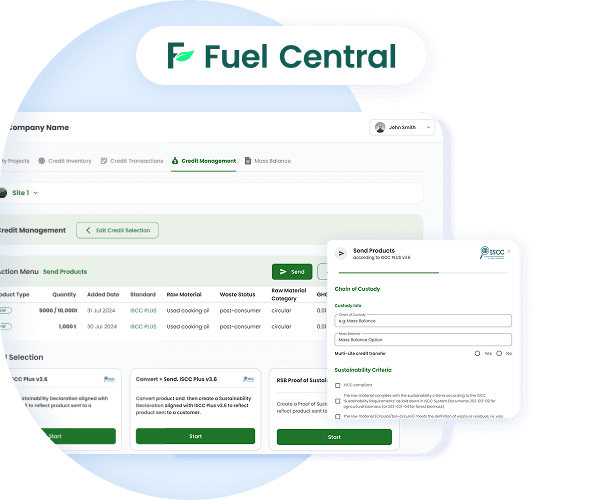
As fuel moves between sites and parties, chain of custody management is critical to ensure alignment between physical biofuel movements and reported proof of sustainability records.

Biofuel supply chain operators gain a clear view of each stage of the production lifecycle.
Inputs are recorded at intake, production data is captured at batch level, and fuel movements are tracked alongside the sustainability attributes that support reporting and certification.
This creates a structured evidence trail that supports certification processes, audits, and regulatory reporting.
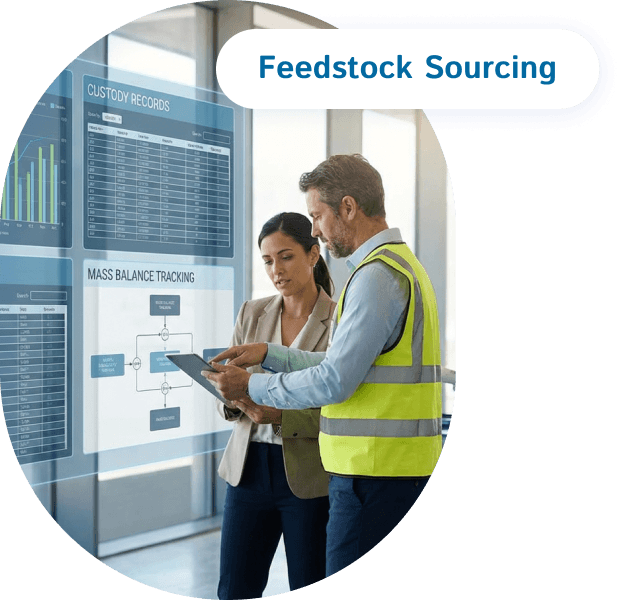

• Feedstock intake records.
• Production and Emissions data .
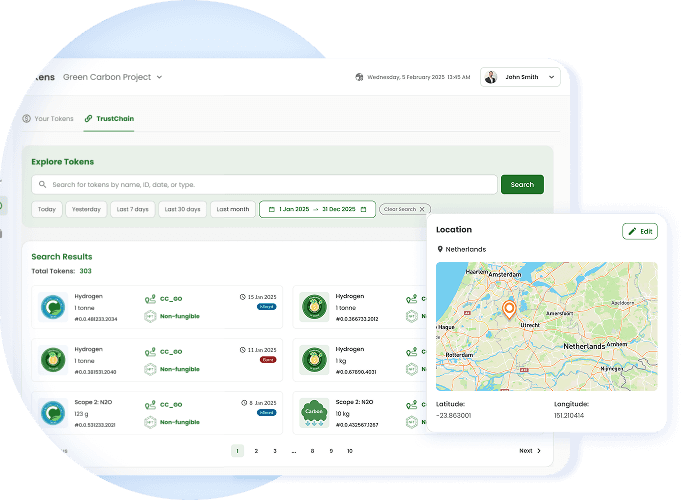
• Sustainability attributes at batch level.
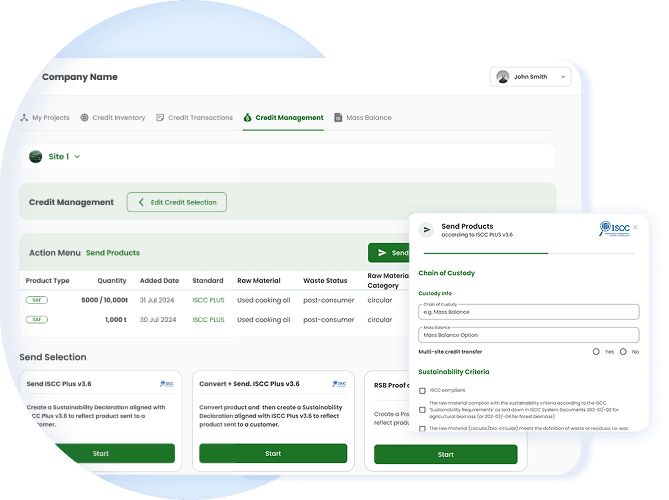
• Fuel movement records.
• Chain-of-Custody (e.g.: Mass Balance).
• Documentation for reporting and audits.