Trusted by











Fuel Supplier Obligations
• Mandatory SAF blending at each Union airport.
• Synthetic fuel sub-mandates from 2030 onward.
• Annual reporting to the Union Database (UDB).
• Full feedstock and lifecycle emissions disclosure.
Aircraft Operator Obligations
• 90% minimum fuel uplift (anti-tankering rule).
• Annual verified reporting to authorities and EASA.
• SAF claims under EU ETS or CORSIA.
• Declaration preventing double reporting.

ReFuelEU Compliance Pathways
SAF Supply & Blending Compliance
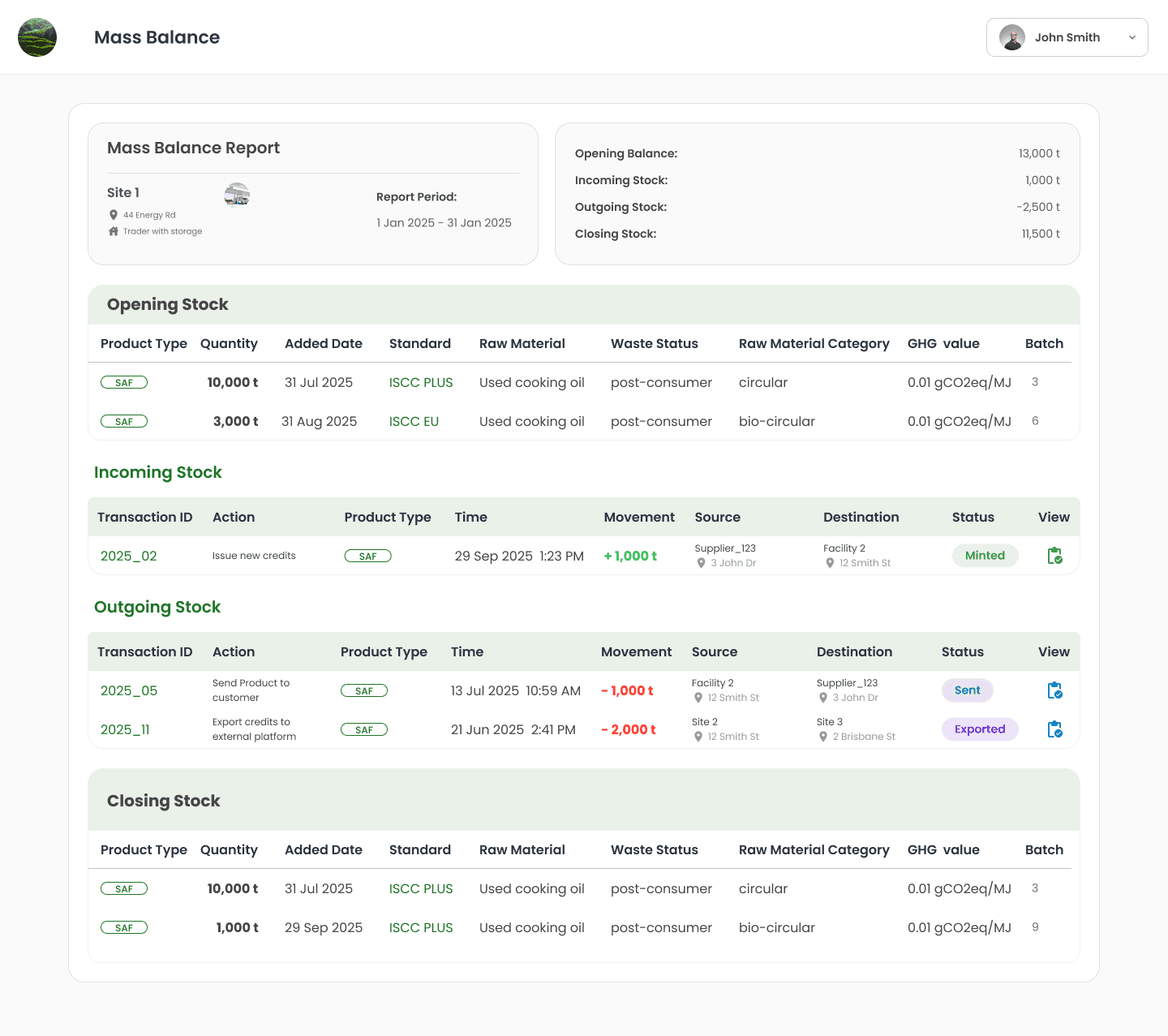
Track SAF volumes by airport.
Verify feedstock eligibility under Annex IX.
Allocate synthetic fuel volumes for sub-mandate tracking.
Structure lifecycle emissions data per batch.

Reporting & GHG Scheme Alignment
Report into the Union Database (UDB).
Avoid double claiming under EU ETS and CORSIA.
Maintain batch-level mass balance records.
Prepare verified annual submissions.
As SAF volumes scale, operational gaps create exposure.
Synthetic Sub-Mandate Gaps
RFNBO volumes not clearly tracked against the synthetic fuel requirement.
Union Database Misalignment
Internal records inconsistent with UDB reporting structures.
Double Claim Risk
SAF batches reported across multiple GHG schemes without allocation controls.
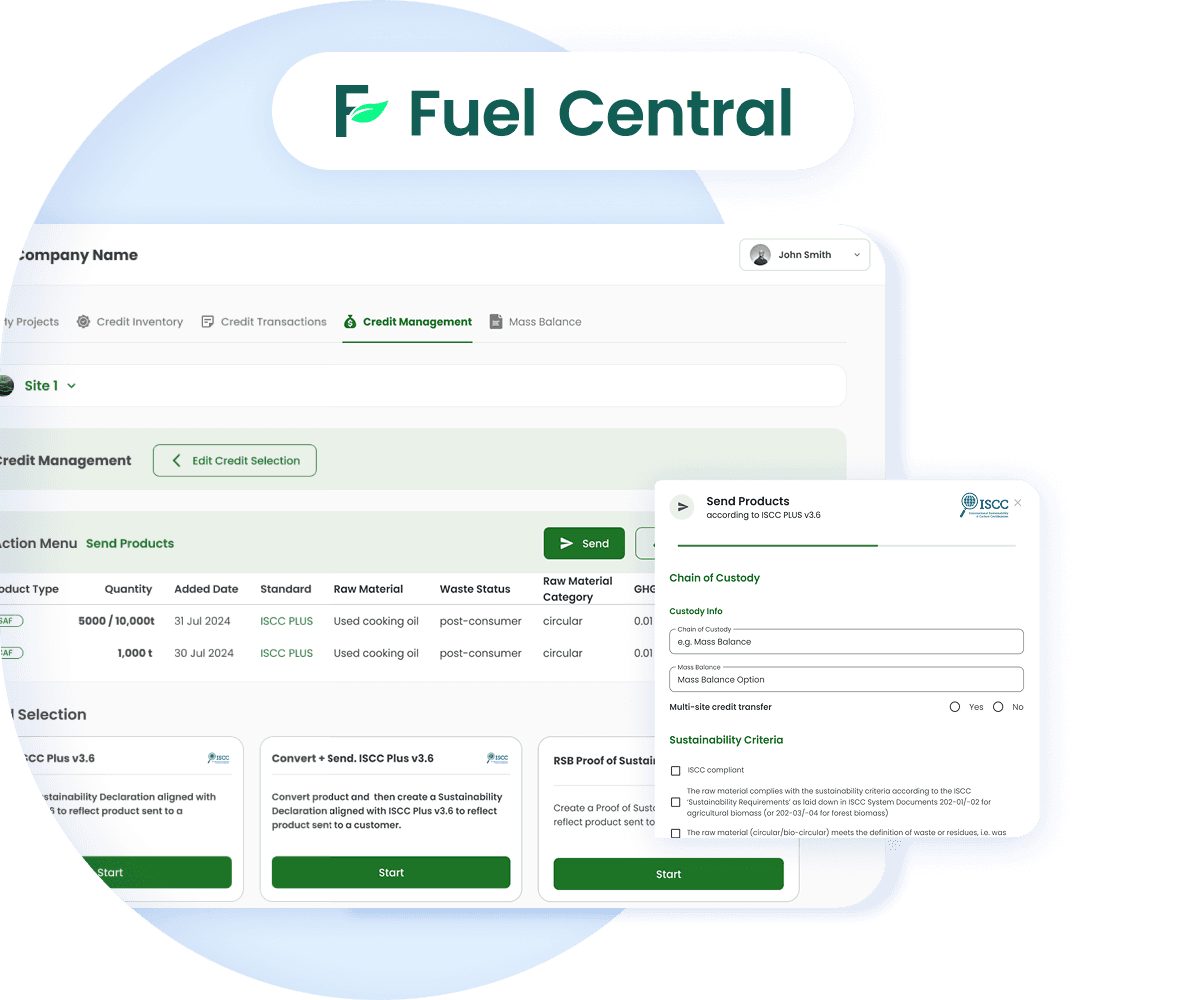
Solution
Data Management
• Track and record SAF documentation.
• Allocate synthetic fuel volumes.
• Structure Annex IX feedstock validation.
• Maintain auditable chain-of-custody records.
Reporting Control
• Align outputs to UDB requirements.
• Manage EU ETS and CORSIA allocation.
• Maintain lifecycle GHG calculation integrity.
• Support audit and verification readiness.
Before submitting Union Database reports, your organisation should be able to answer:
• Can we isolate synthetic fuel volumes from total SAF supply?
• Are Annex IX feedstocks verified and documented?
• Are SAF batches linked to lifecycle emissions data?
• Can we prevent double reporting across EU ETS and CORSIA?
• Are refuelling volumes aligned with the 90% uplift rule?