4 mins read

Carbon Pricing Strategies for Businesses: Data, Compliance, and Transparency
Across many regions and sectors, carbon pricing now directly affects operating costs, investment decisions, and market access. For some organisations, this shows up as an added compliance burden. For others, it becomes a lever to improve efficiency, manage risk, and demonstrate credible climate performance.
What separates those outcomes is not ambition, but data. Without accurate emissions tracking, defensible calculations, and verifiable records, carbon pricing introduces uncertainty rather than clarity.
Understanding Carbon Pricing
At its core, carbon pricing assigns a financial value to greenhouse gas emissions. The principle is straightforward: higher emissions lead to higher costs, creating an incentive to reduce them. In practice, this only works when emissions are measured consistently and reported with confidence.
While carbon pricing takes different forms, the underlying requirement is the same. Businesses must be able to quantify emissions, understand how they change over time, and demonstrate that reported figures are supported by reliable data.
When implemented with discipline, carbon pricing can support several business objectives:
Encouraging efficiency and innovation by making emissions visible in financial decision-making.
Strengthening credibility with investors, customers, and regulators who expect measurable sustainability performance.
Improving financial planning by anticipating future carbon costs and transition risks.
Organisations that approach carbon pricing with structured, data-backed processes tend to gain more than regulatory alignment. They reduce uncertainty and improve internal decision-making.
Types of Carbon Pricing Mechanisms
Different carbon pricing mechanisms place different demands on emissions data and governance.
1. Carbon Tax
A carbon tax applies a fixed price per unit of emissions. While it offers cost predictability, it depends on accurate emissions measurement. Incomplete or inconsistent data directly translates into financial risk.
2. Cap-and-Trade (Emissions Trading Systems)
Under cap-and-trade schemes, regulators set an overall emissions limit and issue allowances that can be traded. Organisations that reduce emissions below their allocation may sell excess allowances, while higher emitters must purchase more.
Success in these systems relies on precise emissions tracking and clear audit trails. Errors in measurement or reporting can lead to compliance gaps or financial exposure.
3. Carbon Markets: Credits and Offsets
Carbon markets allow organisations to compensate for emissions by investing in projects that reduce or remove greenhouse gases elsewhere, such as renewable energy or land-use projects.
Both compliance and voluntary markets depend on robust verification and traceability. Weak documentation or unclear project boundaries can undermine the credibility of offset claims.
Across all mechanisms, one requirement remains constant: carbon pricing does not function without reliable, well-structured emissions data.

Carbon Pricing as a Business Advantage
Carbon pricing mechanisms now operate across a significant share of the global economy, generating substantial public revenue and influencing trade, investment, and procurement decisions. For businesses, the question is not whether carbon pricing will affect them, but how prepared they are to respond.
Cost Management and Risk Reduction
As carbon prices increase or expand into new sectors, organisations with structured emissions data are better positioned to anticipate costs and avoid surprises. Some companies also apply internal carbon pricing to guide investment decisions and prioritise emissions reduction initiatives.
Operational Efficiency and Emissions Reduction
Putting a price on emissions can highlight inefficiencies that are otherwise hidden. When emissions data is integrated into operational decision-making, organisations can identify opportunities to reduce energy use, optimise processes, and lower long-term costs.
Market Access and Trade Readiness
Carbon pricing increasingly influences market access. Policies such as the EU’s Carbon Border Adjustment Mechanism signal a shift toward carbon-aware trade. Businesses that cannot substantiate emissions data may face higher costs or reduced competitiveness in these markets.
Organisations that engage with carbon pricing proactively tend to experience fewer disruptions and greater confidence in their sustainability claims.
The Importance of Digital Infrastructure and High-Quality Data
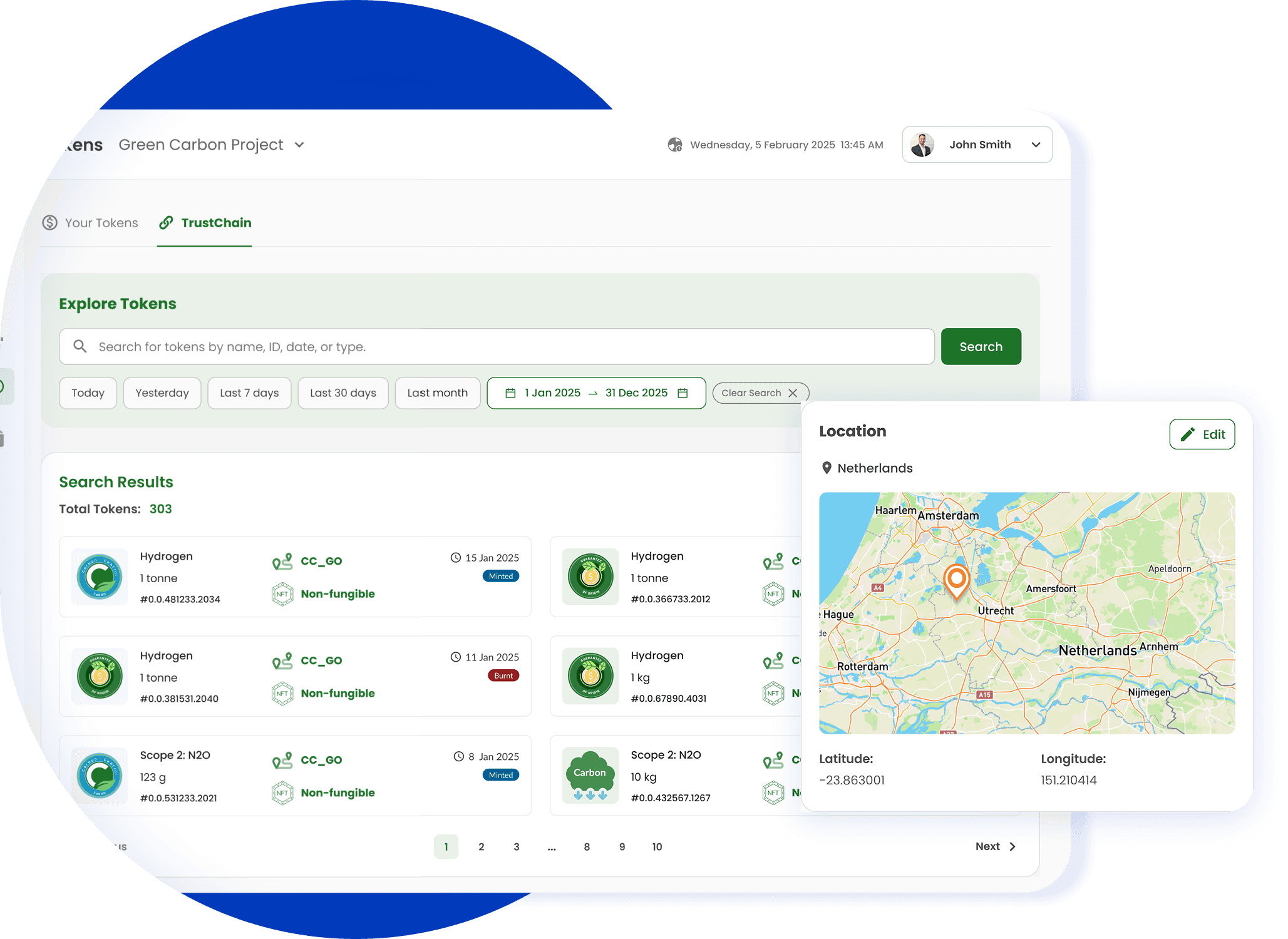
Effective carbon pricing depends on structured, high-quality data. Yet many organisations still rely on fragmented systems, manual processes, or inconsistent methodologies.
To operate confidently in a carbon-priced environment, businesses need to:
Track emissions consistently across operations and relevant supply chains.
Maintain clear calculation methods and historical records.
Support reported figures with documentation suitable for review or assurance.
Transparency does not eliminate carbon costs, but it reduces uncertainty. It enables better decisions, smoother audits, and more credible communication with stakeholders.
Carbon Pricing Strategies
Aligning emissions reporting with recognised frameworks such as the GHG Protocol, ISO standards, or the European Sustainability Reporting Standards helps ensure consistency and comparability.
Independent assurance under recognised standards, including ISO 14064-3 or ISAE 3000, further strengthens credibility by confirming that data and methodologies meet accepted expectations.
Clear, consistent disclosure supported by verifiable records reduces the risk of misinterpretation and builds confidence among regulators, investors, and business partners.
Engaging Stakeholders
Carbon pricing strategies are more effective when they are understood internally and communicated clearly externally. This requires:
Explaining the purpose and implications of carbon pricing.
Building internal capability to interpret emissions data.
Sharing progress and limitations transparently.
Engaging with peers and partners to refine approaches over time.
Credible data provides the foundation for these conversations.
Looking Ahead
Carbon pricing will continue to evolve as governments refine policies and expand coverage. Businesses that treat it solely as a compliance exercise may struggle to adapt. Those that invest early in reliable data systems are better positioned to respond as requirements tighten.
Carbon pricing rewards clarity. Without it, costs rise and confidence falls. Carbon pricing works best when emissions data, reporting standards, and verification processes are aligned.
If your team is assessing how to structure this across facilities, supply chains, or projects, we are available to discuss practical approaches. Contact us to continue the discussion.
More Supply Chains