











RED III Compliance Infrastructure

RED III Compliance Infrastructure

Prepare your organisation for Directive (EU) 2023/2413 with structured mass balance tracking, renewable fuel documentation, and controlled certification workflows.

Prepare your organisation for Directive (EU) 2023/2413 with structured mass balance tracking, renewable fuel documentation, and controlled certification workflows.

Trusted by

Trusted by

Operational Obligations Under RED III

Operational Obligations Under RED III

Operational Obligations Under RED III

Higher Renewable Targets

42.5% binding EU-wide renewable share by 2030, with 45% indicative target. Sector-level obligations now directly affect procurement and sourcing decisions.

Transport Fuel Mandates

29% renewable energy share or 14.5% GHG intensity reduction by 2030. Advanced fuels sub-target of 5.5%, including RFNBO minimum thresholds.

Transport Fuel Mandates

29% renewable energy share or 14.5% GHG intensity reduction by 2030. Advanced fuels sub-target of 5.5%, including RFNBO minimum thresholds.

Renewable Hydrogen in Industry

42% renewable hydrogen share by 2030, rising to 60% by 2035. Industrial users must document source, eligibility, sustainability criteria, and emissions thresholds.

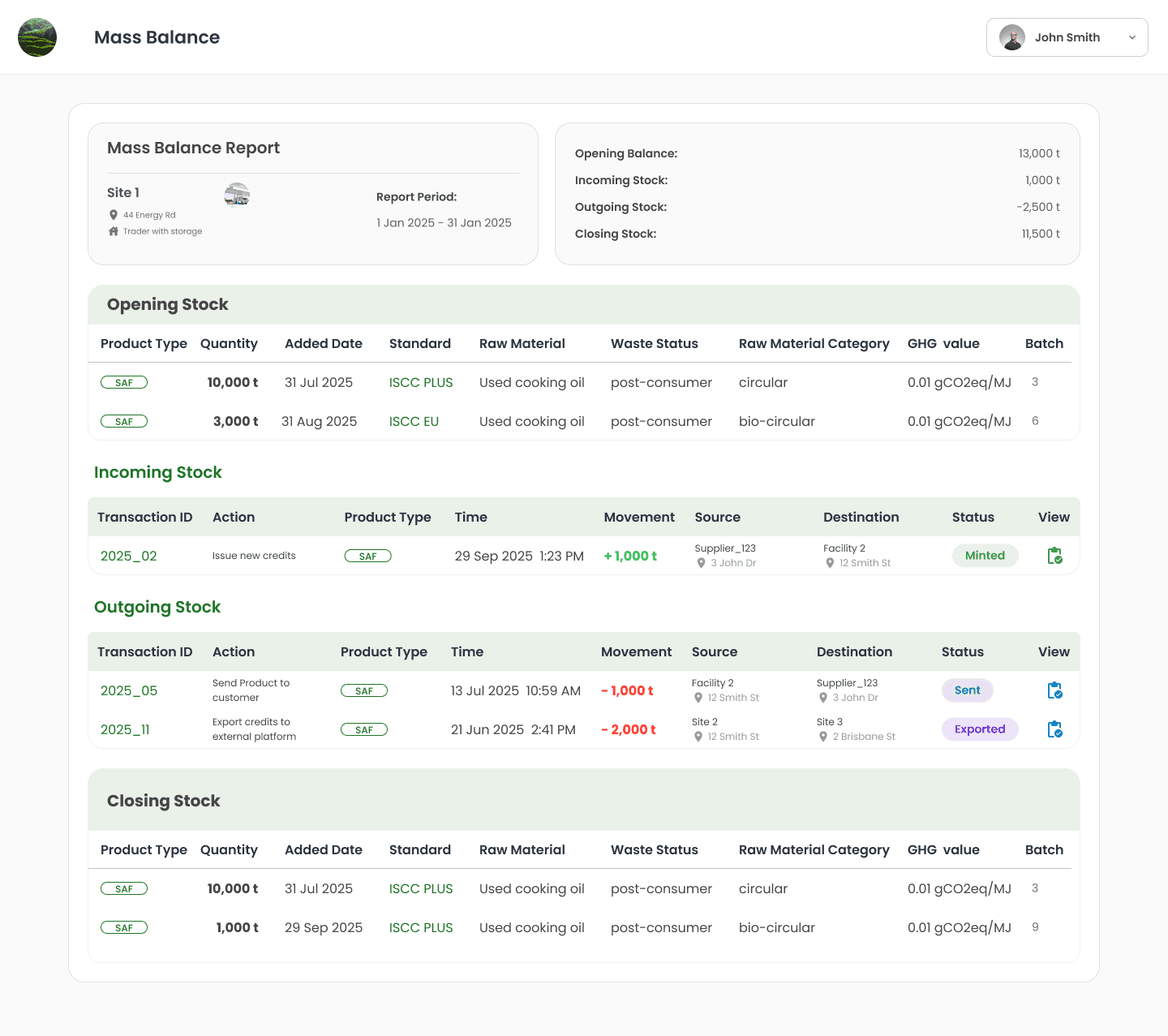
Mass Balance Traceability

Mandatory chain-of-custody systems based on mass balance. Certified volumes must be tracked, reconciled, and documented across supply chains.

Mass Balance Traceability

Mandatory chain-of-custody systems based on mass balance. Certified volumes must be tracked, reconciled, and documented across supply chains.

Proud member of the Roundtable on Sustainable Biomaterials (RSB)

Proud member of the Roundtable on Sustainable Biomaterials (RSB)

Where Organisations Face Risk Under RED III

Where Organisations Face Risk Under RED III

Where Organisations Face Risk Under RED III

RED III compliance depends on verified sustainability data. Operational gaps increase exposure to audit findings, eligibility loss, or credit rejection.

RED III compliance depends on verified sustainability data. Operational gaps increase exposure to audit findings, eligibility loss, or credit rejection.

Inaccurate Mass Balance Allocation

Improper volume reconciliation can lead to over-allocation of certified inputs, creating exposure during audits and jeopardising RED III eligibility.

Incomplete GHG Documentation

Missing or inconsistent lifecycle emissions data may prevent fuels or energy inputs from qualifying under Annex V and VI thresholds.

Incomplete GHG Documentation

Missing or inconsistent lifecycle emissions data may prevent fuels or energy inputs from qualifying under Annex V and VI thresholds.

Fragmented Certification Records

ISCC EU, REDcert-EU, and internal production data stored separately increase reconciliation burden.

Fragmented Certification Records

ISCC EU, REDcert-EU, and internal production data stored separately increase reconciliation burden.

Manual Credit and Registry Controls

Unstructured certificate issuance, transfer, and retirement workflows increase the risk of reporting errors and double counting.

Manual Credit and Registry Controls

Unstructured certificate issuance, transfer, and retirement workflows increase the risk of reporting errors and double counting.

Manual Tracking vs Structured Digital Infrastructure

Infrastructure Determines Compliance Strength

Infrastructure Determines Compliance Strength

Infrastructure Determines Compliance Strength

Manual & Disconnected Tracking

Spreadsheets, siloed certification files, and email-based controls increase reconciliation burden and audit exposure.

Compliance Records

Spreadsheets

17

07

Email Threads

42

14

GHG Calculations

11

21

Structured Digital Traceability Infrastructure
Structured Traceability Infrastructure

Integrated mass balance logic, controlled allocation workflows, and structured documentation create defensible compliance architecture.

Integrated mass balance logic, controlled allocation workflows, and structured documentation for defensible compliance architecture.

3
4
5
6
7
8
2
3
4
5
6
7
%
%

Compliance Mapping...

Alignment assessment in progress
Compliance Modules

Emissions

Allocation

Eligibility

Governance

Green Fuels

Mass Balance

Solution

How Fuel Central Supports RED III Alignment

How Fuel Central Supports RED III Alignment

How Fuel Central Supports RED III Alignment

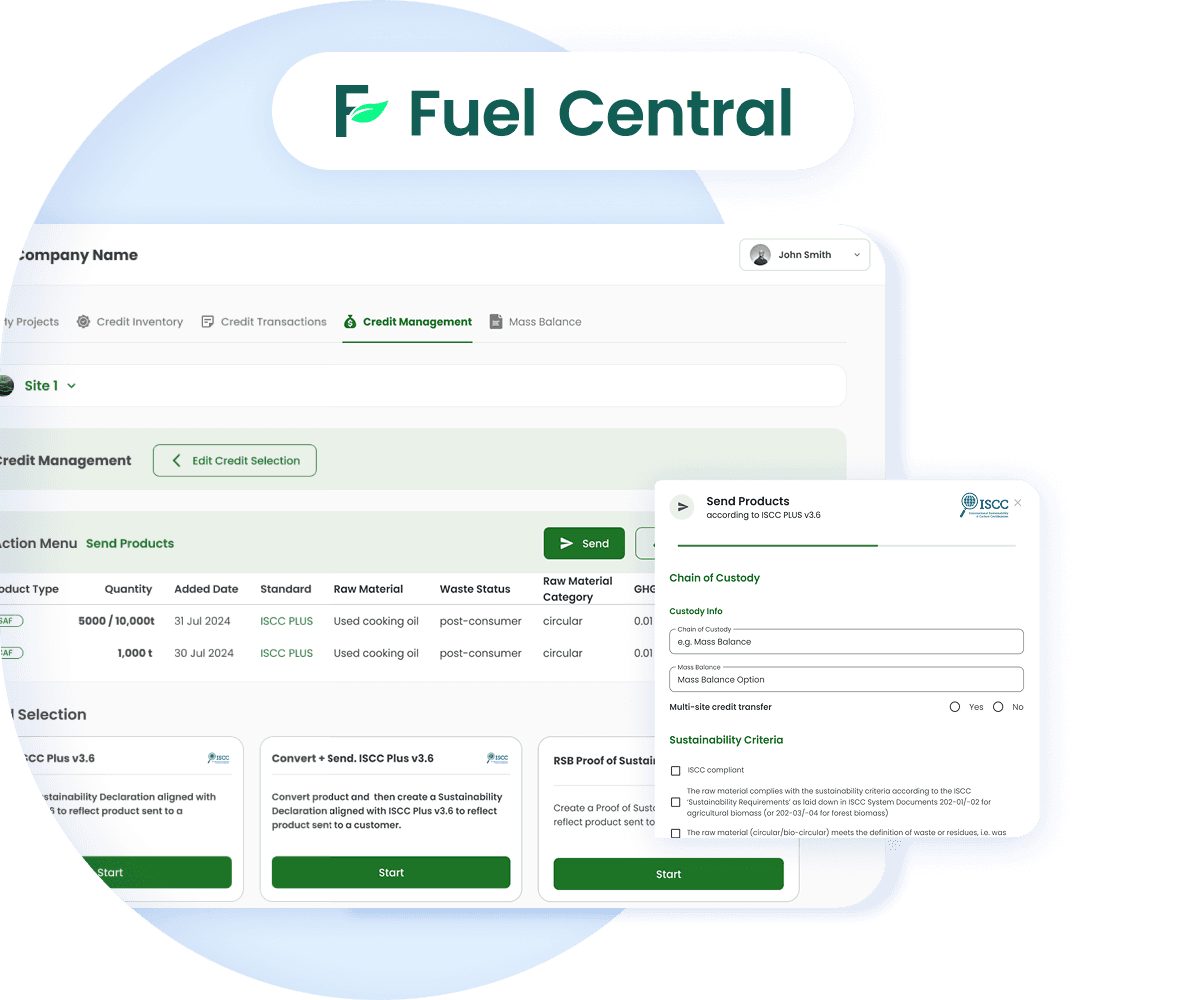
Fuel Central provides structured infrastructure to manage RED III traceability, certification, and lifecycle emissions within one compliance system.

Fuel Central provides structured infrastructure to manage RED III traceability, certification, and lifecycle emissions within one compliance system.

Fuel Central provides structured infrastructure to manage RED III traceability, certification, and lifecycle emissions within one compliance system.

Mass Balance & Data Verification

• Reconcile input and output volumes.
• Structure allocation and transfer records.
• Maintain audit-ready traceability.

Lifecycle Emissions & Documentation

• Capture Annex V/VI GHG calculations.
• Document hydrogen and fuel eligibility.
• Generate reproducible reporting outputs.

Assess Your RED III Compliance Readiness

Assess Your RED III Compliance Readiness

Assess Your RED III Compliance Readiness

Before reporting renewable energy use under RED III, your organisation should be able to answer:

Before reporting renewable energy use under RED III, your organisation should be able to answer:

• Can we reconcile certified volumes under mass balance rules?
• Is renewable hydrogen eligibility traceable and documented?
• Are Annex V/VI GHG calculations reproducible?
• Are certificate transfers and retirements governed by formal controls?
• Can we consolidate RED III documentation in one system?


Frequently Asked Questions

Frequently Asked Questions

Frequently Asked Questions

What is RED III and who must comply?
What are the hydrogen requirements under RED III?
What certification schemes are recognised for RED III?
How does RED III differ from RED II?
What does Article 30 require for mass balance systems?
Can digital infrastructure reduce RED III compliance risk?
What is RED III and who must comply?

RED III is Directive (EU) 2023/2413, adopted in October 2023 to accelerate renewable energy deployment across electricity, transport, heating and cooling, and industry. It sets a binding EU-wide target of at least 42.5% renewable energy consumption by 2030. Compliance affects energy producers, fuel suppliers, hydrogen operators, industrial energy users, utilities, and infrastructure managers operating within EU Member States. Organisations supplying renewable fuels or energy must meet sustainability, traceability, and greenhouse gas accounting requirements to qualify under RED III.

How does RED III differ from RED II?
What are the hydrogen requirements under RED III?
What does Article 30 require for mass balance systems?
What certification schemes are recognised for RED III?
Can digital infrastructure reduce RED III compliance risk?
What is RED III and who must comply?

RED III is Directive (EU) 2023/2413, adopted in October 2023 to accelerate renewable energy deployment across electricity, transport, heating and cooling, and industry. It sets a binding EU-wide target of at least 42.5% renewable energy consumption by 2030. Compliance affects energy producers, fuel suppliers, hydrogen operators, industrial energy users, utilities, and infrastructure managers operating within EU Member States. Organisations supplying renewable fuels or energy must meet sustainability, traceability, and greenhouse gas accounting requirements to qualify under RED III.

How does RED III differ from RED II?
What are the hydrogen requirements under RED III?
What does Article 30 require for mass balance systems?
What certification schemes are recognised for RED III?
Can digital infrastructure reduce RED III compliance risk?