6 mins read

Australia’s Climate Commitments and the Role of Biofuels in Hard-to-Abate Sectors
For Australia to achieve its climate targets all sectors must contribute, but some are far more challenging to decarbonise than others.
In particular, “hard-to-abate” sectors like heavy transport and certain industries cannot be easily electrified in the near term. Heavy road freight, for example, remains reliant on diesel engines, with limited alternative fuel options, and high transition costs, making trucking a challenging sector for carbon reduction.
Likewise, long-distance aviation and maritime shipping currently have no commercially viable electric alternatives and no direct abatement options have been commercially deployed at scale in those modes to date. So, even if the electricity sector and passenger vehicles rapidly shift to renewable power and electrification, critical segments of transport and industry will continue to need liquid fuels by 2030.
Identifying these sectors now is crucial, so that parallel decarbonisation strategies, such as biofuels, Sustainable Aviation Fuel and other green fuels, can be scaled up to complement electrification in meeting Australia’s climate commitments.
Why Transport Emissions Need Alternatives
Without further action, transport is projected to become Australia’s largest emitting sector by 2030. The hardest part of transport to decarbonise is the long-range, heavy-duty segment: aviation, maritime, and long-haul freight.
These modes rely on the high energy density of liquid fuels, jet fuel and diesel, to cover vast distances. Modern batteries and charging infrastructure cannot yet economically support a nonstop Sydney–Perth truck route or a 15-hour long-haul flight, for example.
Australia’s unique geography amplifies this challenge. Our low population density and long intercity distances make substitutes like high-speed rail largely impractical for reducing aviation demand. Similarly, remote communities and mining operations depend on diesel-powered vehicles and generators.
In domestic aviation, emissions have rebounded post-pandemic, reaching record highs in 2022-23. Yet airlines have few options beyond Sustainable Aviation Fuel (SAF) to cut this footprint.
Ocean-going ships face a similar dilemma: experimental vessels powered by ammonia, methanol or batteries are in early phases, but deep-sea shipping has limited commercially deployed zero-emission options for long-distance routes today.
Heavy trucking is slightly closer to viable alternatives (battery-electric or hydrogen fuel-cell trucks are emerging), but uptake is slow.

State of Biofuels in Australia
Australia’s biofuel industry remains modest in scale relative to total transport fuel consumption. The IEA Bioenergy Country Report (2024) indicates that biofuels account for less than 0.5% of Australia’s transport energy use, with fossil fuels continuing to dominate the sector.
Transport fuel pathways
Fuel ethanol (E10 petrol)
Ethanol blending is permitted under national fuel quality standards and occurs primarily through E10 petrol. There is no nationwide blending mandate, and uptake depends on retailer participation and consumer choice, resulting in uneven penetration across states.
Biodiesel (FAME diesel)
Australia’s biodiesel sector remains small. Fuel standards are in place, and production relies largely on tallow and used cooking oil feedstocks. There is no federal blending requirement yet, and higher production costs combined with policy uncertainty have led to stop-start investment and limited scale.
Renewable diesel (HVO)
There is no commercial-scale renewable diesel production operating in Australia. The Fuel Quality Standards (Paraffinic Diesel) Determination 2025 establishes a paraffinic diesel standard, enabling renewable diesel under Australia’s fuel quality framework.
Sustainable aviation fuel (SAF)
Australia does not yet have commercial scale SAF production. Current SAF use is limited to imported volumes for trial and demonstration purposes. Several SAF projects are in feasibility and development, with proponents commonly targeting late-2020s commissioning.

Policy Landscape and Investment Signals
The centrepiece federal policy is the Safeguard Mechanism, which targets around 215 of the country’s largest industrial facilities (those emitting >100,000 t CO₂e per year). The Safeguard sets a baseline emissions limit for each facility, tightened by 4.9% each year to 2030. This effectively forces big emitters – including oil refineries, airlines, mining operations and other heavy industries – to either cut operational emissions or purchase carbon credits to stay within their shrinking cap.
The Safeguard was reformed in 2023 to align these baselines with the 43% by 2030 national target. While not a biofuel policy per se, it creates an incentive: if using biofuels can demonstrably lower a facility’s net emissions (for instance, an airline blending SAF to cut its reported jet fuel emissions, or a mining truck fleet using renewable diesel), it can reduce that company’s liability under the Safeguard.
However, tapping this opportunity requires that the emissions reduction from the alternative fuel is verifiable and credited, a theme we return to in the data integrity section.
Beyond the Safeguard, direct support for biofuels has been mostly state-led and ad hoc. NSW and QLD introduced blending mandates to kick-start local biofuel markets, but those mandates lacked strong enforcement and came with broad exemption criteria, leading to suboptimal outcomes.
One lesson is that optionality deters investment and without a firm requirement or incentive, fuel suppliers might choose not to blend biofuels due to cost or logistical complexity, leaving biofuel producers without a guaranteed market. Industry groups have highlighted that blending mandates provide a stable baseline demand and it could encourage investment in capacity.
Some positive signals have emerged through strategic initiatives. The government’s Future Fuels and Vehicles strategy and the Australian Jet Zero Council are bringing stakeholders together to plan decarbonisation of transport, including the role of biofuels.
Funding programs are also being deployed: the ARENA and CEFC (Clean Energy Finance Corp) have begun co-funding pilot plants and studies (e.g. pre-feasibility studies for SAF production at refineries in Brisbane and Geelong).
These policy moves are encouraging, but grants and roadmaps should be combined with structural incentives. If using biofuel blends remains essentially voluntary for fuel distributors and end-users, the business case for scaling up production is not strong.
SAF as a Key Pressure Point
Of all biofuels use cases, sustainable aviation fuel (SAF) is one of the most immediate opportunities and challenges for Australia’s transport emissions profile.
Aviation emissions remain a growth area. Domestic aviation CO₂ emissions tripled from 1990 to 2019, and projections show domestic jet fuel demand could rise about 75 % by 2050 compared to 2023 levels, driven by population growth, business travel, and freight movement.
In addition, major airlines are now regulated under the Safeguard Mechanism, increasing pressure to address fuel-related emissions. There is rising international regulatory pressure too. ReFuelEU Aviation includes a mandate for at least 2 % SAF in jet fuel by 2025, progressing to higher shares later this decade.
On this scenario, Australia carriers are signalling demand:
Qantas has set a target of 10 % SAF in its fuel mix by 2030 and ~60 % by 2050, supported by corporate SAF Coalition purchases and import trials.
Sydney Airport accounts for about 40% of national aviation fuel uplift, and its leadership links SAF import success with future domestic production momentum.
Government funding under the Cleaner Fuels Program and industry partnerships have advanced feasibility and early project planning. One initiative, Project Ulysses, proposes a Townsville biofuel hub producing ~110 million litres per year of SAF and renewable diesel once operational (targeting production by late 2020s).
SAF technologies range from conventional bio-feedstocks (e.g., waste oils) to emerging synthetic pathways. Feedstock potential and conversion capacity could support substantial SAF volumes over time, but translating potential into commercial output depends on project finance, policy certainty, and bankable offtake.
Traceability and Data Integrity: The Credibility Factor
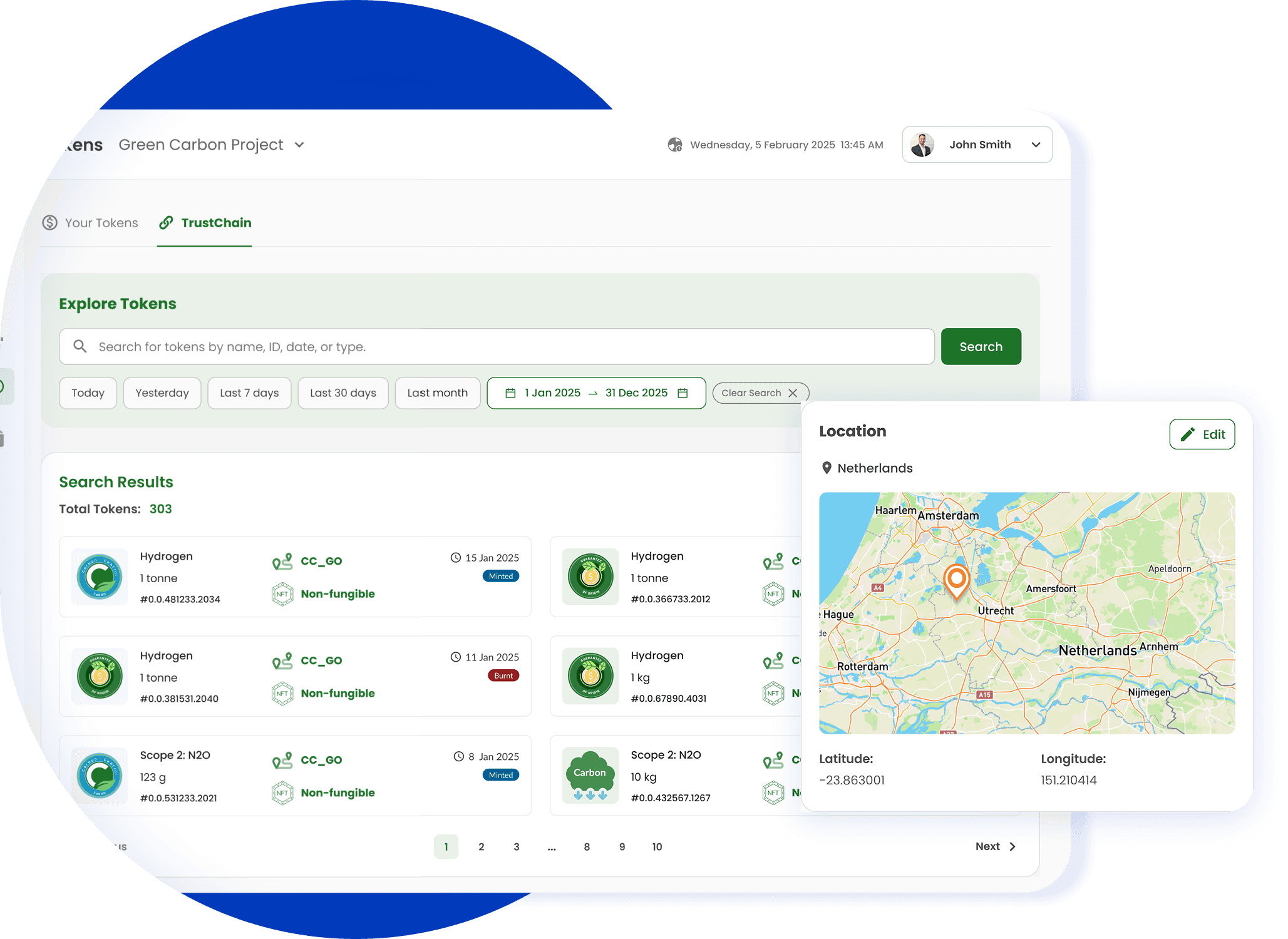
Chain-of-custody systems, including the mass-balance model and certificate-based models , are used to prevent double counting and to ensure that the biofuel used in an aircraft or vehicle corresponds to a verified sustainable feedstock input.
Key elements that define credibility include:
Feedstock origin and sustainability
Biofuels must be produced from feedstocks that meet defined sustainability criteria, such as waste materials or crops grown without land-use change. Feedstock origin should be documented. Used cooking oil or tallow, for example, should be traceable back to source to avoid substitution with higher-risk inputs such as unsustainable palm oil. Past biofuel fraud cases in the EU, including mislabelled imports, demonstrate how weak traceability can undermine climate outcomes.
Lifecycle emissions data
The emissions profile of a biofuel should be measured and reported across its lifecycle. Regulators and airlines recognise emissions reductions only where lifecycle analysis demonstrates a net greenhouse gas benefit compared to fossil fuel. This requires aggregation of data across feedstock production, processing, transport, and fuel distribution. In support of this, the Australian Government has committed $18.5 million to develop a Guarantee of Origin framework for low-carbon fuels, including SAF and renewable diesel. The framework is intended to certify emissions intensity and align Australian fuels with international reporting requirements.
Production, allocation, and auditability
Organisations using biofuels or SAF must be able to report fuel use with confidence. If an airline claims emissions reductions under the Safeguard Mechanism, auditable records must support those claims. Similarly, biofuel producers exporting to Europe increasingly need to record transactions in the EU Union Database to support traceability and reduce double counting risk. These requirements push organisations toward stronger digital recordkeeping for chain of custody, certificate issuance, and audit trails. Systems that align with recognised standards make verification and reporting simpler over time.
As biofuel supply chains scale, credibility is established through data quality alongside stated intent. Traceability frameworks aligned with international standards shape which fuels qualify, which projects reach investment decision, and which sustainability claims remain usable over time.
If you are looking for support on structuring your sustainability data for certification and ensuring traceability, reach out to our team for an intro call.
More Circular Economy