4 mins read

Carbon Reporting & Blockchain: TROEF’s Key Lessons
Cities and industries worldwide are under increasing pressure to decarbonise, but achieving net-zero targets requires more than ambition; it demands data-driven strategies, transparent energy tracking, and trusted carbon verification.
That was the driving force behind TROEF (Transparent Reduction of CO₂ and Optimisation of Energy in a Flexibility Ecosystem), a four-year research initiative that brought together 10 industry-leading consortium partners across data solutions, energy construction, grid infrastructure, energy market trading, and platform development, with NoviqTech serving as the CO₂ & green energy track & trace provider.
The project explored how peer-to-peer energy trading, CO₂ certificate tracking, and real-time energy monitoring could contribute to the development of carbon-neutral cities.
TROEF delivered a comprehensive technical architecture, outlining 24 business functions and an interoperable data model that enhances trust, flexibility, and transparency in energy markets. These findings continue to shape the future of sustainable energy ecosystems.
TROEF: A Blueprint for Carbon-Neutral Cities
The TROEF consortium brought together industry leaders, grid operators, and academic institutions – including NEN, Vrije Universiteit Amsterdam, STEDIN, and others – to develop a scalable framework for sustainable energy communities.
Key Areas of Research:
Peer-to-peer (P2P) energy trading – Explored decentralised models for renewable energy exchange.
CO₂ certificate trading – Investigated verified marketplaces for carbon reductions.
Internet of Energy (IoE) connectivity – Studied real-time, data-driven energy optimisation. IoE leverages smart digital technologies to optimise energy use and integrate renewable sources, contributing to systemic efficiency in urban environments.
Smart Grid Energy Optimisation – Explored how real-time energy tracking, demand response incentives, and decentralised storage solutions could reduce transition costs and enhance energy resilience.
Interoperable Data Model – TROEF developed a flexible, scalable data model built on ESDL (Energy System Description Language), integrating smart meter data, energy mix information, CO₂ and energy certificates, and weather data.
The project's technical architecture, data exchange model, and security framework provide critical insights for businesses, municipalities, and policymakers working to implement data-driven decarbonisation strategies.

What TROEF Revealed About the Future of Carbon Markets
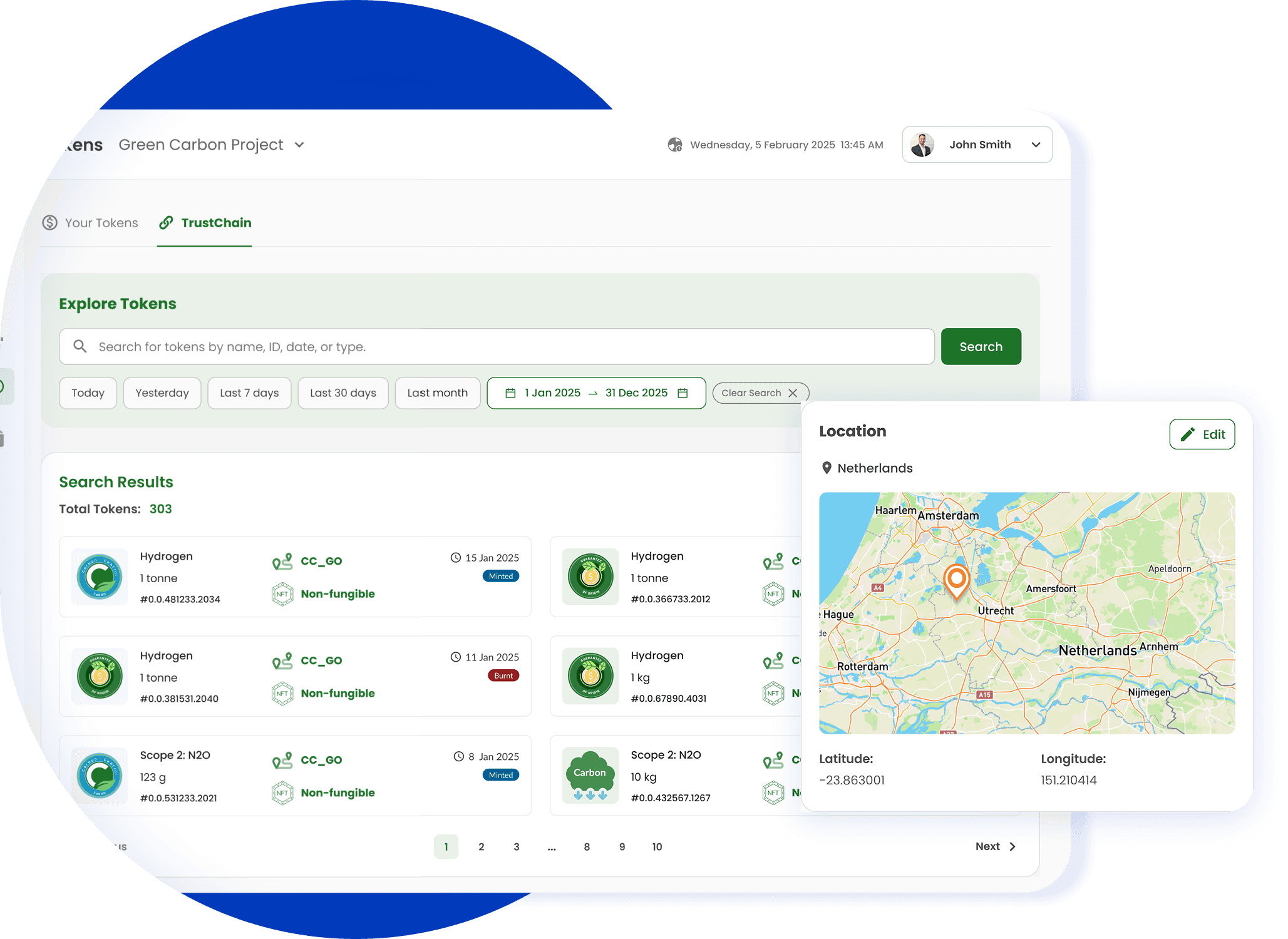
A core element of TROEF’s research was ensuring data transparency, accountability, and trust in carbon reporting – challenges that blockchain-based carbon tokenisation can help address.
Tokenisation uses blockchain technology to create a verifiable and tamper-proof record of emissions reductions, improving the integrity of sustainability claims and unlocking new carbon market opportunities.
Key Benefits of Carbon Reporting Tokenisation (Digital Infrastructure for Carbon Reporting)
Enhanced Transparency
Every carbon credit or emission reduction is recorded on a decentralised ledger (blockchain), preventing manipulation. This ensures stakeholders, regulators, and the public can trust the data, reducing risks of fraud, double counting, or greenwashing.
Transparency fosters trust in sustainability claims, allowing businesses and municipalities to confidently demonstrate their climate commitments.
Streamlined Carbon Credit Trading
Tokenisation, also referred as digital certificates, automates verification and enhances market liquidity, reducing the inefficiencies of traditional carbon markets.
Improved Compliance
Blockchain-backed records ensure organisations meet global environmental regulations with verifiable, audit-ready data. With climate-related regulations tightening, businesses need to prove their sustainability claims.
Tokenisation provides a tamper-proof audit trail, making regulatory reporting seamless and reducing compliance risks. This ensures companies stay ahead of evolving environmental policies while avoiding penalties.
Increased Market Participation
Lower barriers to entry encourage businesses, municipalities, and individuals to participate in carbon offset markets without relying on expensive intermediaries.
TROEF’s technical foundation for energy transparency and CO₂ tracking reinforces the broader value of blockchain-based verification in carbon markets. Businesses and municipalities need trustworthy, auditable carbon data to comply with regulations, access incentives, and prove their sustainability commitments.
Turning Research into Action with Carbon Central
TROEF generated valuable data on decentralised energy models and real-time carbon tracking, but putting these insights into practice requires scalable, production-ready solutions. That’s where Carbon Central comes in.
How Carbon Central Delivers Real-World Impact
Eliminating data gaps with real-time carbon monitoring
Tracks energy production, consumption, and CO₂ emissions as they happen.
Provides automated emissions calculations aligned with Greenhouse Gas Protocol (GHG), ISO 14064, and EU regulatory frameworks.
Delivers granular insights into energy consumption patterns, allowing stakeholders to optimise renewable energy use and reduce costs.
Without real-time data, organisations rely on estimates that may be inaccurate. Carbon Central provides instant, reliable insights that allow decision-makers to take proactive measures, such as adjusting energy consumption or optimising renewables use in real-time.
Building trust with blockchain-backed transparency
Creates an immutable, auditable record of every energy transaction and carbon offset.
Strengthens stakeholder trust by providing secure, verifiable carbon data for investors, regulators, and customers.
Prevents double counting or manipulation of carbon credits, a persistent issue in voluntary carbon markets. Blockchain eliminates concerns over misreported or exaggerated emissions reductions.
Unlocking new financing opportunities with tokenised carbon credits
Converts verified carbon reductions into tradeable digital assets, unlocking new sources of sustainability funding.
Enables secure, transparent carbon credit transactions across industries and jurisdictions.
Supports cross-border carbon trading, allowing businesses to monetise sustainability efforts more effectively.
Optimising energy use with AI-driven forecasting
Uses AI-powered forecasting tools to balance supply and demand in smart grids.
Reduces transition costs by optimising local energy usage and storage.
Facilitates demand response incentives, rewarding participants for consuming energy at optimal times.
Enhances grid resilience, ensuring renewable energy is used efficiently without overloading infrastructure.
By integrating Carbon Central’s technology, businesses and municipalities can translate research-driven concepts into fully operational sustainability strategies.
Key Takeaways for Businesses and Policymakers
The TROEF project highlighted the importance of real-time emissions tracking, blockchain-based verification, and tokenised reporting in shaping the future of carbon markets.
For organisations navigating sustainability commitments, the key takeaway is clear:
Setting sustainability targets is only the first step. Ensuring they are measurable, verifiable, and auditable is what drives real impact.
Businesses that embed trust and transparency in their carbon management strategies will stay ahead of regulations, attract investors, and strengthen relationships with customers and communities.
Blockchain-backed carbon reporting is no longer a futuristic concept. It’s a strategic advantage for businesses looking to lead in the sustainability transition.
The shift to a net-zero future is happening now. The real question is how will your organisation take part? Book an intro call today.
More Product & Tech