5 mins read

How Blockchain is Used to Verify Sustainable Aviation Fuel (SAF) Claims and Transactions in Book-and-Claim Systems
Sustainable Aviation Fuel (SAF) is a low‑carbon substitute for conventional jet fuel. SAF can significantly reduce flight emissions as it carries a measurable climate benefit. To make credible environmental claims, regulators and airlines need robust systems to track where SAF is produced, sold, and claimed.
But there’s a logistical snag: once SAF enters a shared pipeline or storage tank, it becomes indistinguishable from regular jet fuel, making it impossible to determine which aircraft ultimately used the SAF molecules. Book-and-Claim systems solve this challenge.
In a book-and-claim system, rather than relying on physical fuel segregation, digital certificates represent SAF. Environmental attributes are tracked by producers and maintained across the supply chain. A certificate can then be transferred among fuel suppliers, airlines, or even corporate customers, who then “retire” them to claim the CO₂ savings.
Blockchain technology can strengthen these systems by acting as a transparent, tamper‑proof ledger of all SAF certificates and trades. Each SAF certificate gets a unique record on the blockchain, supporting traceability from production to end use.
Airlines and regulators use chain-of-custody models to prove who owns SAF benefits. The main models are:
Model | How It Works | Pros & Cons |
Physical Segregation | SAF is blended, stored and transported separately The airline that receives SAF blend is the only one that can claim its emissions savings. | Pros: Simple to understand; direct traceability. |
SAF blends can be mixed with conventional fuel, with records kept to track the total volume of SAF added. An airline can claim emissions reductions only up to the share of SAF it actually uplifts from that fuel pool. | Pros: May use existing infrastructure where applicable; lower costs. Cons: Limited flexibility- claims are tied to physical production, blending, delivery and final use of the sustainable fuel. Impractical for smaller airports and regions where SAF is not available. | |
The physical fuel is mixed freely, and separate digital certificates (SAF credits) represent the environmental benefit. Producers create certificates for SAF batches. Airlines or other buyers purchase and retire these certificates in their accounts – even if the fuel was delivered elsewhere. | Pros: Highly flexible and scalable. Airlines have the flexibility to to claim fuel without directly receiving it This creates a global market for SAF environmental benefits. |
Table 1: Comparison of SAF chain-of-custody models. Sources: ICAO/IATA analyses.
In essence, book-and-claim decouples the physical fuel from the claim. For example, production of certified SAF can occur in Country A. The SAF can be blended and sold as traditional jet fuel to the local supply, with the environmental attributes captured within a SAF certificate. An airline in Country B could then choose to purchase and retire that certificate to apply its own carbon reduction. This way, SAF producers reach more buyers, and airlines anywhere can claim SAF benefits without costly new pipelines or shipping fuel long distances.
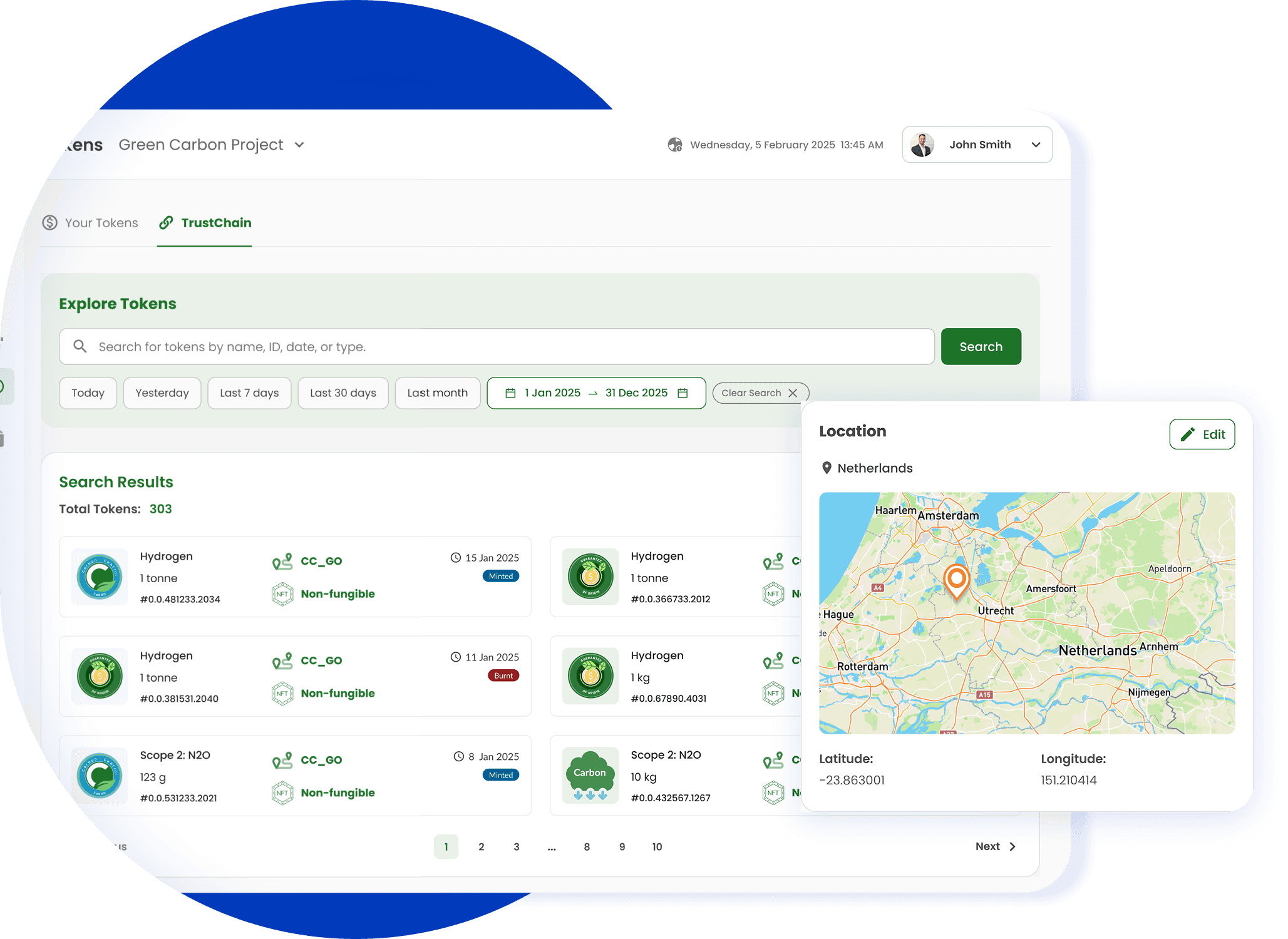

Blockchain: Ensuring Traceability and Integrity
When SAF claims are managed through certificates rather than physical delivery, organisations need a trustworthy SAF tracking system to handle issuance, transfers, and retirements.
Blockchain technology brings three key benefits to SAF book-and-claim systems:
Immutable Ledger: Once a certificate is recorded on the blockchain, it cannot be altered or deleted. This creates a permanent, publicly verifiable record of all SAF certificates and transfers. In practice, that means if two different systems (e.g. European and U.S. registries) both issue SAF certificates, a blockchain can help ensure they aren’t double-counted by linking them in one registry.
Digital Certificates: Each SAF batch gets a unique certificate on the blockchain. Think of it like a one-of-a-kind serial number. This prevents fraud because it’s nearly impossible to duplicate or copy a certificate without breaking the blockchain’s rules. When a certificate is retired (used) by an airline, that status is also written to the blockchain, which also helps avoid double-counting.
Transparent Tracking: Anyone with access can trace the history of a certificate. The blockchain can show which producer created it, any intermediaries who traded it, and which airline or company ultimately retired it. This transparency builds confidence.
These features directly address common challenges in SAF markets. For instance, when multiple governments have SAF mandates (like Europe’s ReFuelEU Aviation) and many voluntary programs (corporate scope-3 targets), it’s easy for the same liter of SAF to be claimed twice.
For instance, if a refinery produces 100 tonnes of SAF and receives 100 corresponding certificates on a blockchain registry. Two airlines contract to buy 50 tonnes each. The certificates flow from the producer to the airlines, all on the ledger. Once Airline X retires its 50 certificates, they are marked as permanently used, preventing Airline Y from claiming those same certificates.
Blockchain-Backed SAF Tracking
A blockchain-backed book-and-claim system like Fuel Central records every SAF certificate transaction in a tamper-proof ledger. Each issuance, trade, or retirement is logged with a timestamp and unique ID, giving all parties, fuel producers, buyers, and auditors a shared source of truth.
These capabilities are exactly what regulators say is needed. For example, the EU Commission’s recent SAF report calls for “enhancing traceability and transparency in SAF transactions” and notes efforts to improve SAF tracking through data systems.
As SAF volumes grow, we can expect blockchain-backed platforms to play an ever larger role. They connect airports, fuel suppliers, airlines, and even corporate travellers on a shared digital infrastructure.
In this way, blockchain does more than just secure data. It underpins the credibility of the SAF market, ensuring certificates’ traceability and verifiability, and credible claims; supporting aviation’s towards net zero emissions.
More Product & Tech