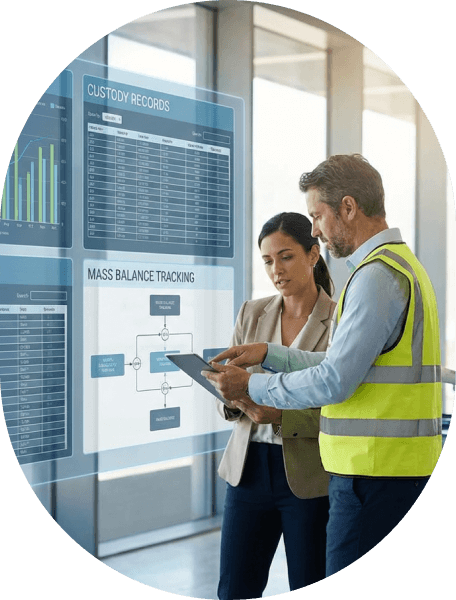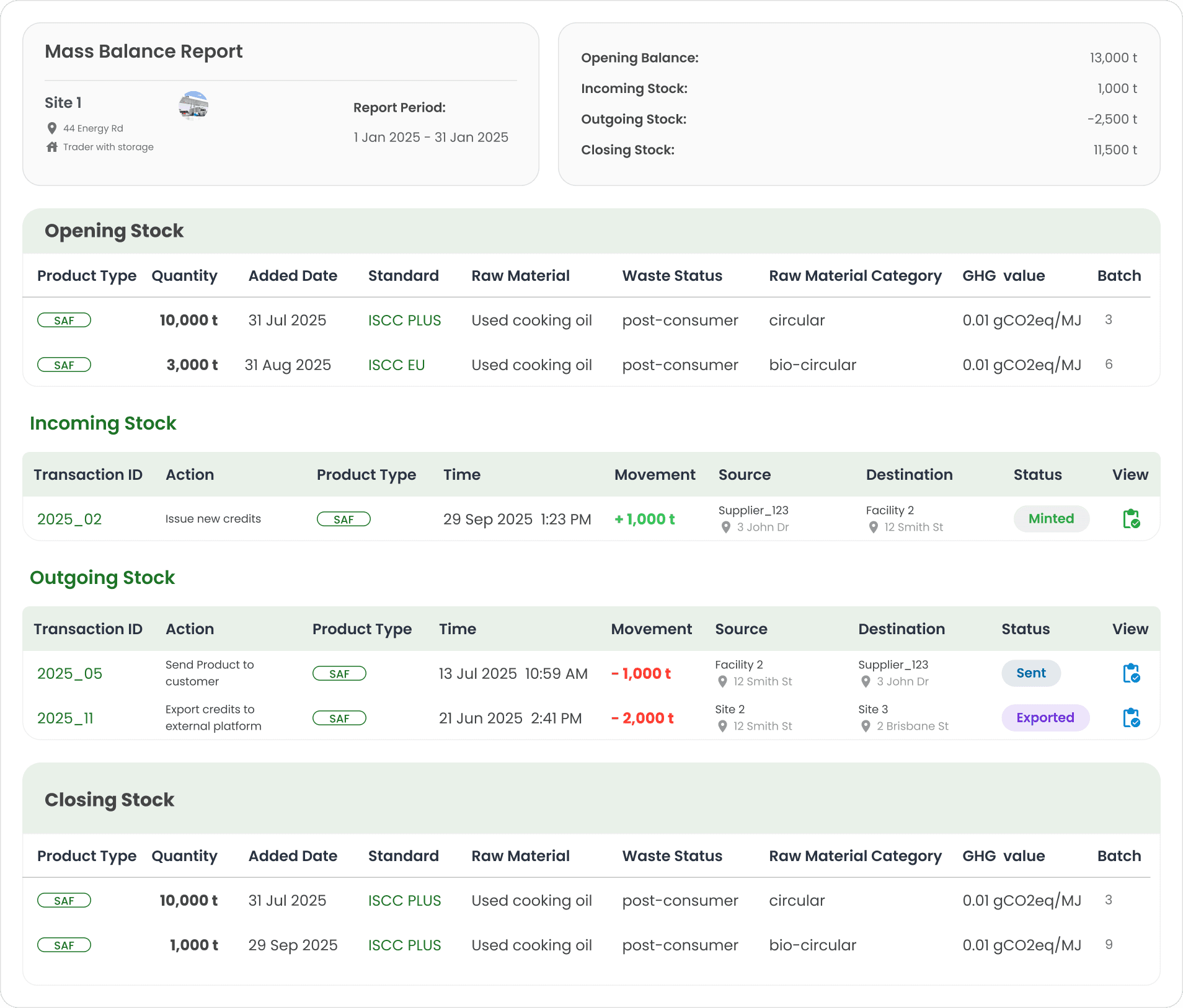











Input Output Ledger
• Record certified inputs by site
• Track outputs by batch or period
• Apply yield and loss factors
• Allocate sustainable share consistently
• Prevent over allocation and duplicates
• Retain proof with each shipment


Mass balance requires consistent handling of inputs, outputs, allocation, and supporting records across reporting periods. In practice, issues arise when these elements are managed across disconnected systems.
Allocation Overruns
Certified output allocated beyond certified input across periods.
Conversion Factor Errors
Yields, losses, and blends misapplied across sites or batches.
Fragmented Evidence
Proof of sustainability files spread across inboxes and folders.
Weak Audit Replay
Hard to reconstruct claims from input to shipment under scrutiny.
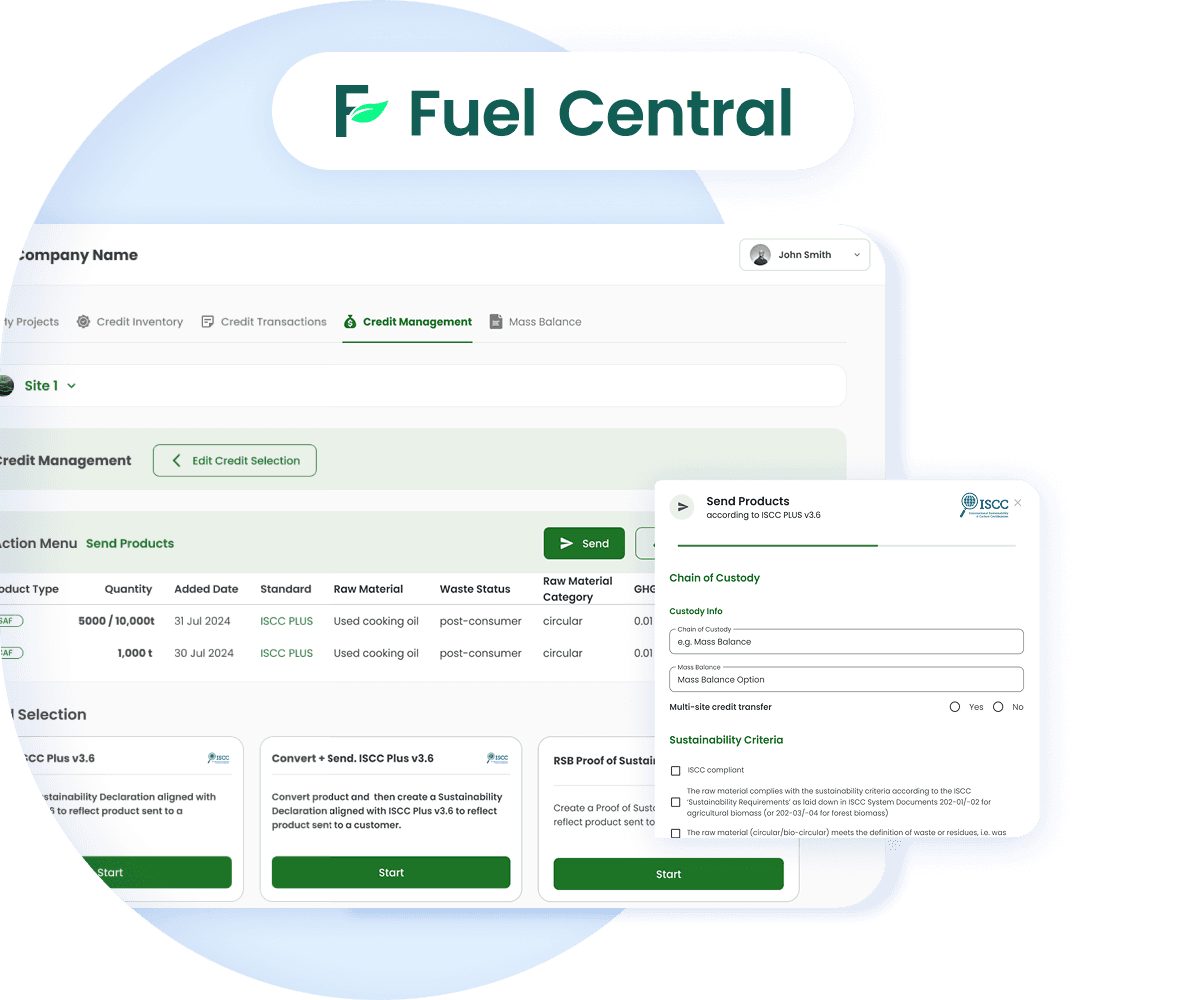
Solution
Mass Balance Accounting
Reconcile inputs and outputs across sites and reporting periods using consistent allocation logic.
Proof and Audit Trail
Link all sustainability claims to supporting documentation, with a traceable history of allocations and transfers.
Mass balance becomes increasingly difficult to manage as inputs, outputs, allocation, and documentation expand across sites and reporting periods. Manual processes introduce delays and inconsistencies between operational data and certified volumes.
A structured system maintains consistent records across all transactions and reporting periods.