6 mins read

Most biofuel producers do not think about traceability software until something forces them to. A certification audit is coming up. A downstream buyer is asking for documentation that does not exist in a clean format. A government scheme has just been announced and the compliance window is shorter than expected.
By that point, the problem is not just the platform. It is two or three years of production data sitting in spreadsheets, shared drives, and email threads that now needs to be reconstructed before anything can be certified.
Considering that, let’s look at when traceability infrastructure becomes necessary, what the warning signs are before it becomes urgent, and what producers in early pilot or demonstration phases can do now to avoid the reconstruction problem later.

Manual Tracking might Work for Early-Stage Biofuel Producers
A producer running a pilot plant or early demonstration facility can manage sustainability data manually. Volumes are low. The number of feedstock inputs is limited. The team is small enough that one person knows where everything is.
This is true. And it is also the reason so many producers find themselves in difficulty at scale.
Manual systems do not fail suddenly. They degrade gradually as production grows. A spreadsheet that works for tracking one feedstock delivery per week stops working when it is five deliveries from three different suppliers with different sustainability documentation attached to each. A shared drive that made sense for one site becomes unmanageable across two or three facilities in different regions.
According to research by McKinsey, supply chain data gaps are among the top three barriers companies face when trying to meet sustainability reporting requirements. In the biofuels sector specifically, those gaps translate directly into certification risk, because every litre of fuel needs a documented chain of custody from feedstock origin to final delivery.
Biofuel Traceability Requirements Across RED III, RFS and Guarantee of Origin
The threshold for what counts as adequate documentation is rising across every major market.
In the European Union, the Renewable Energy Directive (RED III) requires biofuel producers to demonstrate a verified chain of custody for every batch, with greenhouse gas savings calculated against a defined baseline. RED III sets minimum GHG savings thresholds of 70% for existing installations and 80% for new ones, and the documentation required to prove those savings has to be traceable, auditable, and linked to the specific feedstock batch in question.
In the United States, the Renewable Fuel Standard administered by the EPA requires producers to generate Renewable Identification Numbers (RINs) for qualifying fuel batches. Generating a RIN requires verified feedstock data, production records, and batch-level documentation. Errors in that documentation can result in invalid RINs, which carry significant financial penalties.
In Australia, the Guarantee of Origin scheme launched in November 2025 covering renewable electricity and hydrogen. Coverage of low-carbon liquid fuels including renewable diesel and SAF is under active government consultation and expected to come into scope in 2026. Producers operating in Australia who are not yet building their data infrastructure are running out of lead time.
The consistent pattern across all three markets is the same: the minimum viable documentation standard is increasing, and it is increasing faster than most early-stage producers expect.

When Manual Biofuel Tracking Starts to Break Down
Producers who have been through this transition describe the same inflection point. It is not a single event but a combination of three things arriving at roughly the same time.
Batch-Level Tracking Becomes Too Complex
Production volume crosses a threshold where batch-level tracking becomes genuinely complex. Instead of one or two feedstock streams, there are multiple suppliers with different sustainability credentials, different transport distances, different emissions factors. The mass balance calculation that one person could manage in a spreadsheet now requires reconciling data from several sources before every reporting period.
Buyers Start Asking for Certification Documents
A new market or buyer relationship requires documentation that the current system cannot produce cleanly. A European off-taker wants an ISCC-compliant Proof of Sustainability. A domestic buyer needs batch-level carbon intensity data. The data exists somewhere across the organisation, but assembling it into a format the buyer will accept takes days of manual work per shipment.
Audits Expose Missing Chain of Custody Evidence
A certification audit or government review arrives with a documentation request that exposes the gaps. Auditors under schemes like ISCC or RSB do not just verify that the right numbers are present. They verify that those numbers can be traced back to source records, that the chain of custody is unbroken, and that the methodology used to calculate emissions is consistent and documented. A manual system that worked well enough for internal purposes often does not hold up to that level of scrutiny.
Any one of these is manageable. All three together, at a time when production is scaling and the team is already stretched, is where producers describe genuinely wishing they had built the infrastructure earlier.
What Early-Stage Biofuel Producers Should Track Before Scaling
The answer is not necessarily to implement a full enterprise traceability platform before it is needed. It is to build the data habits that make a platform easy to implement when the time comes.
That means deciding now, at the pilot or demonstration stage, what data will need to be tracked at scale. Feedstock quantities and origin. Transport distances and methods. Energy consumption by process step. Emissions factors applied to each input. The methodology used to calculate total carbon intensity per batch.
The GHG Protocol Corporate Standard, which underpins most major biofuel certification schemes, provides a clear framework for organising this data. Producers who structure their records around Scope 1, 2 and 3 emissions from the beginning create a dataset that maps directly onto certification requirements later, rather than having to reinterpret years of unstructured records when an auditor asks for them.
The secondary benefit of starting early is that it surfaces data gaps before they become compliance problems. A producer who begins tracking feedstock transport distances during pilot operations will discover quickly whether that data is even available from their suppliers. If it is not, there is time to build that requirement into supply agreements before commercial production begins. Discovering the same gap during a certification audit is a different problem entirely.
The Cost of Delaying Biofuel Traceability Infrastructure
The financial case for early infrastructure investment is straightforward in markets where sustainability credentials carry a price premium.
In California's Low Carbon Fuel Standard, LCFS credits have traded at prices exceeding $200 per metric tonne. Access to those credits depends on being able to document the carbon intensity of the fuel with verified, auditable records. A producer who cannot demonstrate a clean chain of custody is not just missing the credit revenue. They are also locked out of the premium market segments that require certification as a condition of purchase.
In voluntary carbon markets, credits from projects with full integrity certification command a roughly 25% price premium over non-certified equivalents, a gap that is widening as buyers become more selective about the quality of the credits they purchase.
The cost of implementing a traceability platform is fixed and relatively predictable. The cost of being unable to access certified markets, or of failing a certification audit and having to rebuild documentation from scratch, is neither.
When to Move from Spreadsheets to a Traceability Platform
There is no universal answer. A producer at true pilot scale, running a single feedstock stream through a demonstration facility with no immediate plans to sell into certified markets, might not need a full traceability platform today.
What they do need is a clear view of what the documentation requirements will look like when they do enter those markets, and a data collection approach that will not require complete reconstruction when that moment arrives.
The producers who navigate the transition from pilot to commercial production most smoothly are not the ones who implemented the most sophisticated systems earliest. They are the ones who understood what data would eventually be required and built the habit of collecting it before the pressure arrived.
Fuel Central for Biofuel Traceability and Chain of Custody Management
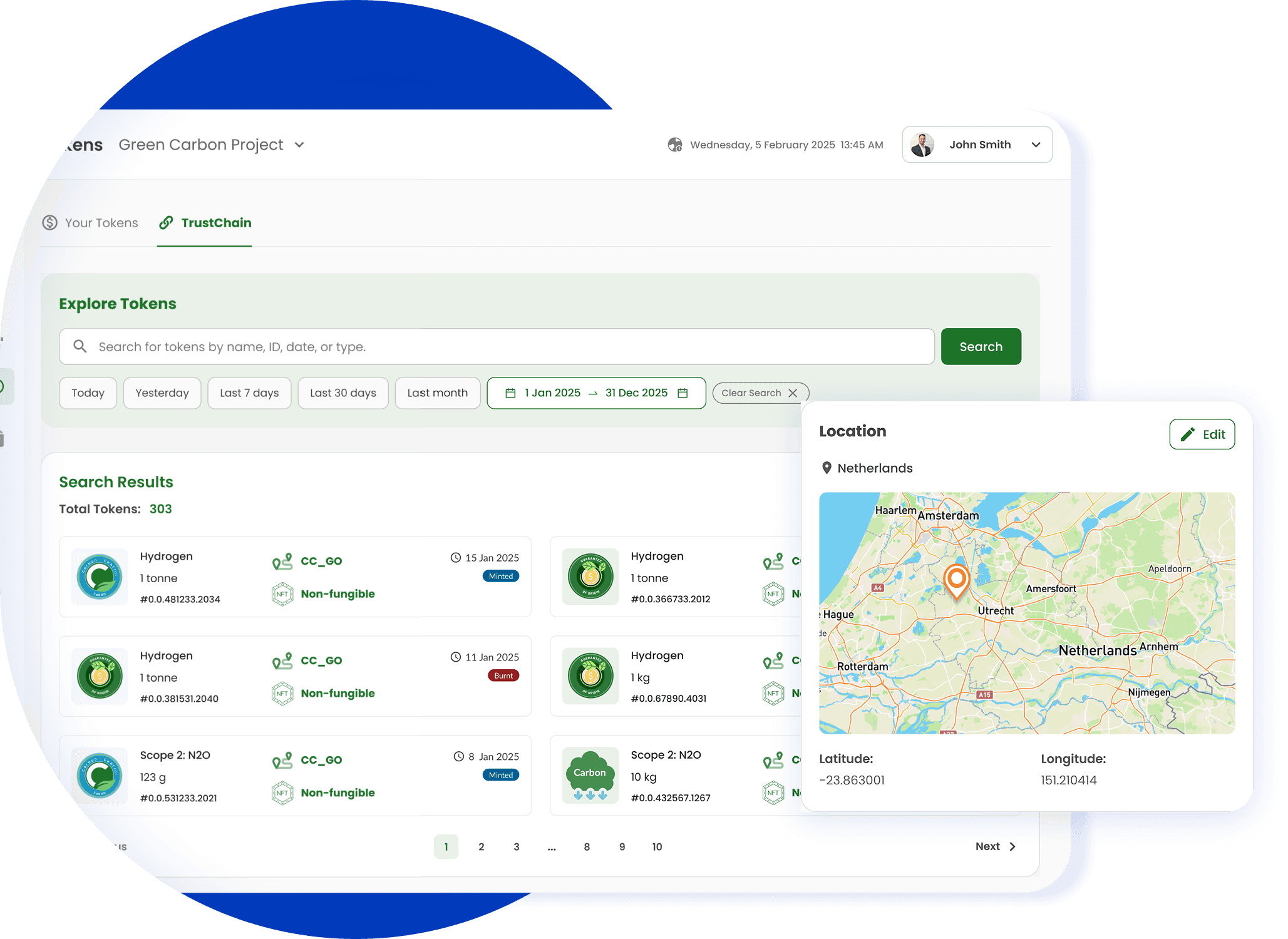
Noviqtech's Fuel Central is built specifically for chain of custody management across the liquid fuel supply chain. For early-stage producers, that means organising sustainability records into a structured, audit-ready format from the first batch, even before full automation is in place. For producers scaling toward commercial volumes, it means connecting feedstock sourcing, processing, trading, and offtake into a single traceable system where every unit of fuel is tracked from origin to end use.
The platform supports both national frameworks such as Australia's Guarantee of Origin scheme and global certification schemes including ISCC and RSB. It handles mass balance, segregation and book and claim chain of custody models, generates eligible documents including Proof of Sustainability, Sustainability Declarations, and Guarantee of Origin certificates, and uses blockchain-backed tokenisation to give auditors full oversight of every environmental credit in the system.
For producers who are building toward certified markets but are not yet at commercial scale, Fuel Central's digital twin architecture means the traceability framework can be configured around your specific supply chain now, so that when production volumes grow and certification becomes mandatory, the documentation is already structured and verifiable rather than scattered across spreadsheets and shared drives.
If you are at the pilot or demonstration stage and want to understand what your chain of custody infrastructure should look like before commercial production begins, book a discovery call. We will map out what your target markets require and what you can put in place now to make certification straightforward when the time comes.
More Supply Chains