9 mins read

SAF & Book‑and‑Claim: Tackling Corporate Travel’s Scope 3 Emissions
Emissions from corporate air travel are typically reported under Scope 3, Category 6: Business Travel, per the Greenhouse Gas Protocol. These are indirect emissions arising from employee travel in vehicles not owned or controlled by the reporting company. The fuel combustion itself is attributed to the airline as Scope 1, since the carrier operates the aircraft and directly consumes the fuel.
This distinction presents a challenge in which companies are accountable for emissions tied to business flights, but have no operational control over the aircraft, routing, or fuel type. As scrutiny around Scope 3 grows, sustainability teams are increasingly expected to address these travel-related emissions through credible, sector-specific interventions.
Sustainable Aviation Fuel (SAF) has emerged as a mitigation pathway within the aviation sector. Under CORSIA, eligible sustainable aviation fuels must meet defined sustainability criteria and deliver lifecycle greenhouse gas emissions reductions compared with conventional aviation fuel. SAF can also be used as a drop in fuel when blended within certified limits, making it compatible with existing aircraft and airport fuel infrastructure.
However, SAF availability remains limited and geographically concentrated.
To overcome these constraints, stakeholders are exploring book-and-claim chain-of-custody models, which allow SAF’s environmental attributes to be allocated separately from the physical delivery of the fuel. These mechanisms can enable corporate buyers and fuel traders to support SAF deployment and make documented aviation value chain claims.
How SAF Book-and-Claim Can Support Corporate Scope 3 Action
For airlines, book-and-claim can provide a mechanism to recover part of the SAF price premium beyond their own operations. For corporate buyers, it can provide a documented insetting tool to support business travel decarbonisation claims, where the applicable accounting framework, certification programme or disclosure methodology permits that treatment.
Here’s how it typically works in an aviation context:
An airline fuels some of its aircraft with SAF, or purchases a quantity of SAF from a producer, and receives documentation for that fuel. This may include proof of sustainability documentation, lifecycle emissions data, chain of custody information and certificate records associated with the SAF batch.
The airline can then allocate the SAF’s environmental attributes to a third party, such as a corporate customer, rather than using the full benefit solely for its own voluntary claims. The corporate buyer pays the SAF premium, covering part of the additional cost of the fuel, and in return receives documentation verifying the volume of SAF, its sustainability attributes and the emissions reductions associated with that fuel.
The corporation can use this documentation to support Scope 3 business travel decarbonisation claims, provided this is done in line with the applicable GHG accounting recommendations, certification scheme rules and disclosure requirements.
This arrangement shares decarbonisation responsibility. Airlines receive support from corporate customers who help shoulder the SAF premium. The corporation, in turn, supports a real aviation sector intervention: lower carbon fuel use linked to a verified SAF batch. This is generally treated as an inset rather than an offset, because the intervention occurs within the aviation value chain.
Programs like ICAO’s Carbon Offsetting and Reduction Scheme for International Aviation (CORSIA) also recognise SAF use as a way for airlines to meet obligations (by reducing offsetting requirements). But how do we ensure that an SAF batch isn’t double-counted by both the airline and the corporate, or by two different companies?
Emerging standards help prevent double claims. For instance, IATA’s guidance specifies that if an airline sells the Scope 3 SAF attribute to a corporate, the airline should subtract that SAF from its own claims. Only one airline can claim the Scope 1 reduction for a given SAF batch.
At the same time, the corporate can claim the Scope 3 reduction, but no two separate customers should claim the same SAF certificate. In practice, if an airline “retires” the SAF certificate on behalf of a corporate client (essentially assigning the claim to that client), the airline cannot also count that reduction toward offering lower-emission tickets for other passengers. Conversely, if the airline uses SAF for its regulatory compliance (e.g. under CORSIA or an EU mandate) and sells a Scope 3 certificate to a corporate, careful accounting is needed.
ICAO acknowledges this scenario: under CORSIA’s rules, an airline can apply SAF to reduce its sector obligations, and a third-party company can separately claim the Scope 3 reduction, provided the two claims are in different “accounting spheres” (one in a national/international inventory, the other in voluntary corporate reporting). The key is transparency – all parties must clearly disclose how SAF usage and claims are allocated, and robust audit trails should back up the allocations.
The Critical Role of Traceability and Digital Infrastructure
Book-and-claim separates the physical fuel from the environmental claim, so trustworthy traceability systems are essential. SAF certificates will not gain broad acceptance, especially with regulators or investors, unless there is confidence in the integrity of the bookkeeping.
Digital infrastructure plays a pivotal role here. Key features of such systems include geographic flexibility, standardised data and certificate formats, retirement controls, one to one attribution of claims and compliance checks against schemes such as CORSIA, ReFuelEU Aviation and other applicable SAF frameworks.
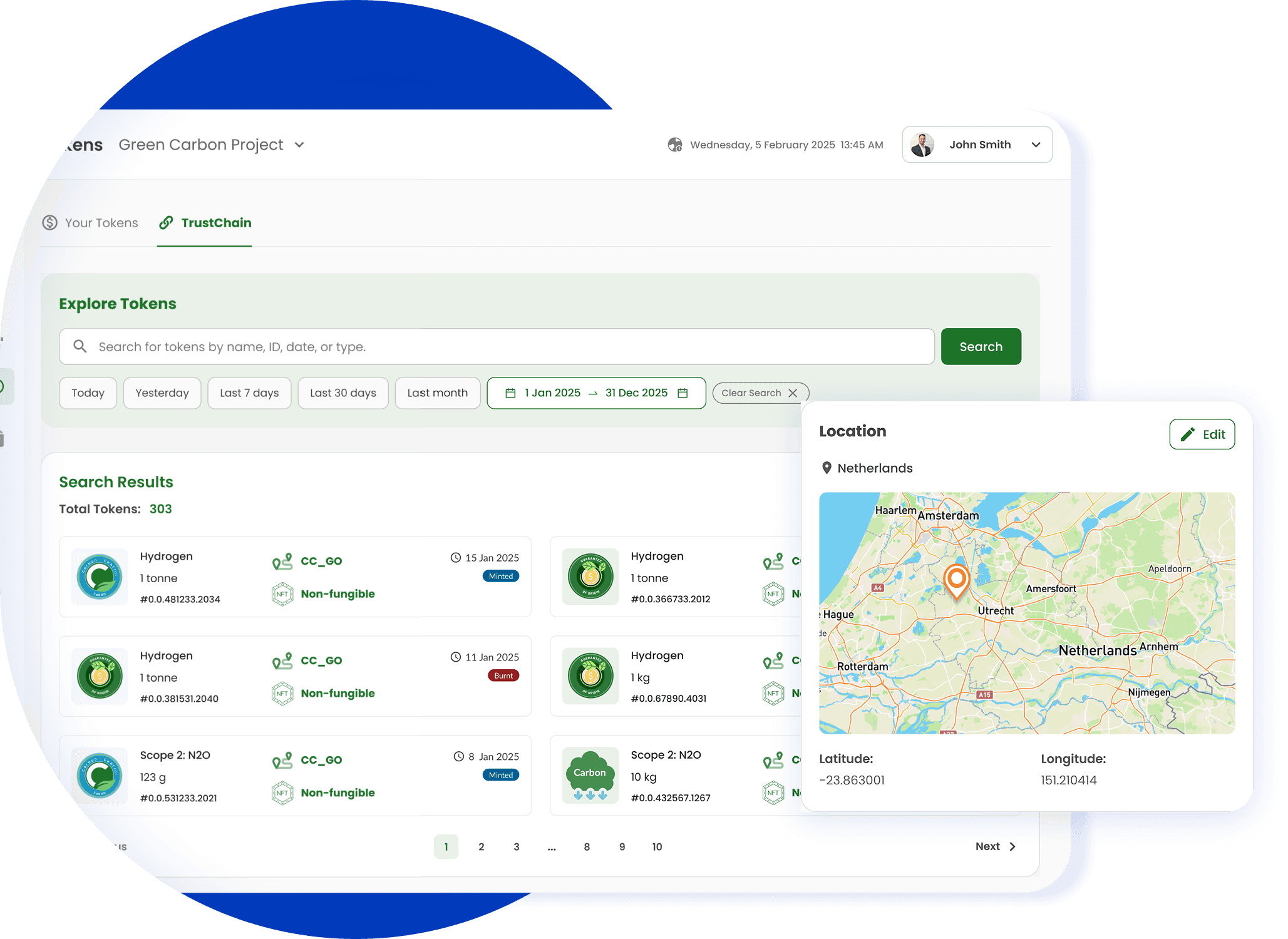
Traceability platforms like Fuel Central are designed to support these requirements by connecting fuel, certificate and evidence records across the SAF lifecycle. This can include feedstock information, production data, chain of custody records, sustainability documentation, transfer events and retirement records.
The use of digital twins and distributed ledger technology can provide a tamper evident data layer, helping participants maintain a clearer audit trail from production evidence to certificate retirement. Once a claim is assigned or retired, the record should make it clear who can use the associated environmental attribute and prevent the same certificate from being allocated elsewhere
In short, strong digital infrastructure is the foundation of credible book and claim. It creates an auditable trail of who can use emissions reduction claims and helps mitigate double counting risks, giving confidence to participants that their sustainability claim is linked to a real, single and documented SAF batch.

Benefits and Opportunities
When implemented with integrity, SAF book and claim systems bring notable benefits for aviation sustainability.
Empowering Corporate Climate Action
Companies can directly invest in aviation decarbonisation by purchasing SAF certificates, often called SAFc. This provides a way to address the business travel emissions profile in corporate climate strategies.
Unlike more generic offsets, SAF certificate purchases support the scale up of a lower carbon fuel within the aviation sector itself. For companies with material air travel emissions and limited control over aircraft operations, this can be a targeted way to fund in sector decarbonisation.
The accounting treatment still needs care. Corporate buyers should avoid implying that a SAF certificate automatically removes emissions from a Scope 3 inventory. The stronger position is that verified SAF purchases can support documented value chain intervention reporting, with any inventory adjustment made only where the relevant framework allows it.
Financing the SAF Scale Up
Book and claim can channel money from corporates to airlines, producers and other SAF market participants, helping to bridge the price premium that currently makes SAF difficult to scale.
SAF remains materially more expensive than conventional jet fuel, and voluntary corporate demand alone will not solve the cost gap. However, certificate based demand can send a market signal and help support offtake for lower carbon aviation fuels.
Airlines gain a mechanism to recover part of the additional cost of SAF. Fuel producers gain stronger demand signals. Corporate buyers gain a documented link between climate investment and aviation sector decarbonisation.
Over time, greater SAF production, stronger policy support and clearer accounting rules may help reduce costs and improve market confidence.
Regulatory Readiness and Co Benefits
By participating early in SAF certificate programmes, corporates and airlines can build internal capability ahead of stricter policy and disclosure expectations.
For airlines, robust documentation is already important for compliance with schemes such as CORSIA and SAF mandates. For corporates, the benefit is process readiness. If accounting rules evolve to more formally recognise verified SAF purchases as a Scope 3 mitigation measure, companies that have already developed governance, evidence management and claim controls will be better prepared.
There is also a reputational benefit, but it should be framed carefully. Supporting SAF can show that a company is funding aviation sector decarbonisation. That message is stronger when it is backed by transparent documentation, clear claim language and a robust audit trail.
Limitations, Controls and Governance Gaps
Despite the promise, there are significant challenges and caveats to acknowledge. SAF and book and claim are not a silver bullet for aviation emissions, especially not yet.
These constraints do not make SAF book and claim unworkable. They define the controls producers, traders, airlines and corporate buyers need before claims can scale: clear SAF evidence, certificate uniqueness, transparent allocation records, conservative claim language and audit ready retirement workflows.
Supply Constraints
The impact of SAF on overall aviation emissions remains limited today. ICAO reported that global SAF production reached approximately 1 million tonnes in 2024. That represented about 0.6% of international aviation jet fuel consumption and about 0.3% of global aviation fuel consumption.
Until production scales significantly, SAF’s contribution to aviation climate goals remains modest and must be communicated as such.
Cost and Market Uncertainties
SAF remains materially more expensive than standard jet fuel. The certificate price passed to corporates will reflect this premium, after considering any subsidies, mandates or market incentives.
Relying on voluntary corporate demand to fund SAF raises questions such as how many firms will pay, and at what price, especially when they do not physically receive the fuel?
There is also a risk of market volatility. If economic pressure rises, companies may reduce voluntary SAF certificate budgets. Airlines and producers need more consistent offtake to support investment decisions. Voluntary schemes can help, but policy support, mandates and clearer recognition mechanisms are also needed to scale SAF supply.
Double Counting and Accounting Complexity
Another risk is double counting of emissions reductions. Without standardised rules, the same SAF could potentially be counted in multiple voluntary claims or across regulatory and voluntary reporting contexts without sufficient transparency.
For example, if an airline uses SAF for compliance under a regulatory scheme and also allocates associated environmental attributes to a corporate buyer, the accounting treatment needs to be clearly disclosed. The issue is not always that two claims exist. The issue is whether those claims are made in different accounting contexts, whether the claim language is accurate and whether the same voluntary attribute is being claimed twice. This is where corporate accounting becomes complex.
The GHG Protocol has not yet fully codified how companies should handle environmental attribute certificates for Scope 3 inventories. Market based accounting approaches are currently not generally included for Scope 1 or Scope 3 inventory accounting, although GHG Protocol is developing additional guidance on actions and market instruments.
Until airlines, corporates, auditors and regulators operate from a common rulebook, there is a governance gap that could lead to inconsistent claims or unintentional double counting across borders and programmes.
Coordination with Airlines and Chain of Custody Concerns
SAF book and claim works best when the aircraft operator remains visible in the chain of custody and claim allocation process. The airline is the Scope 1 operator consuming the fuel, so its role is central to ensuring that SAF is genuinely used in aviation and that associated claims are properly allocated.
This prevents the creation of disconnected or “orphan” claims that are not clearly linked to actual aviation fuel use.
In practice, this means corporates should not treat SAF certificates as generic instruments detached from the aviation value chain. Airlines, producers, traders, certificate platforms and buyers need aligned records, consistent documentation and interoperable systems.
That adds complexity, but it is also the point. Credible SAF book and claim depends on a clean evidence chain.
Regulatory Recognition and Fragmentation
As of today, there is no universally accepted global regulatory framework that fully integrates aviation book and claim for corporate Scope 3 reporting.
CORSIA covers aircraft operator emissions and recognises eligible aviation fuels for reducing offsetting requirements. It does not provide a full methodology for third party corporate Scope 3 claims.
The EU’s ReFuelEU Aviation framework focuses on SAF supply obligations at EU airports. It also includes mechanisms for assessing flexibility and possible SAF tradability arrangements, but it should not be read as a complete corporate book and claim framework.
The UK SAF Mandate is now in force. It started in 2025 and includes tradeable certificates for SAF supply, with the obligation rising over time. This provides a regulatory certificate mechanism, but corporate Scope 3 claim treatment remains a separate accounting question.
In short, the policy landscape is still fragmented. Some jurisdictions are building SAF mandates and certificate systems. Corporate Scope 3 accounting guidance is still evolving. Companies buying SAF certificates need to understand which claim is being made, which framework supports it and what evidence is required.
The governance gap is the absence of a universally accepted framework for SAF book and claim across regulatory compliance and voluntary corporate reporting. Until such frameworks mature, early movers need to navigate ambiguity with conservative claim language and strong evidence controls.
Conclusion
SAF with book and claim can help companies support lower carbon aviation fuel use and address the carbon impact of corporate air travel. It connects corporate climate investment with fuel switching inside the aviation sector.
For SAF producers, fuel suppliers and traders, the opportunity sits in the evidence chain behind each claim. Every SAF batch needs clear records for feedstock origin, production data, sustainability attributes, lifecycle emissions, chain of custody, ownership transfer and certificate retirement.
When those records are structured from the start, SAF suppliers can give airlines and corporate buyers stronger evidence for their claims. They can also reduce the risk of duplicate allocation, missing documentation and audit delays.
As SAF book and claim moves into broader market use, the whole supply chain will need systems that can manage evidence at transaction level. That means connecting physical fuel records, sustainability documentation, certificate inventory and claim retirement in one auditable workflow.
For stakeholders seeking to operationalise this shift, from feedstock records to certificate retirement, integrity demands a traceability platform designed for the SAF lifecycle. Fuel Central is built to support digital traceability across SAF evidence, certificate records, transfer workflows and claim allocation.
If you are building book and claim capabilities, infrastructure will determine how confidently certificates can be issued, transferred and retired. Start with one designed for audit ready SAF end-to-end supply chain traceability. Book a demo with our team.
More Supply Chains