4 mins read
EPA RFS Set 2 (2026–2027): Requirements, Volume Mandates RIN Changes, and Compliance Requirements
On March 27, 2026, the Environmental Protection Agency (EPA) finalised its “Set 2” rule under the Renewable Fuel Standard (RFS), setting the highest biofuel volume mandates in the program’s 20-year history. For 2026 and 2027, compliance obligations increase materially across all fuel categories.
The Renewable Fuel Standard (RFS) is a U.S. federal program that requires transportation fuel sold in the United States to contain a minimum volume of renewable fuels, with compliance enforced through Renewable Identification Numbers (RINs).
For biofuel producers, fuel traders, and distributors, this creates a larger domestic market to serve, alongside a significant increase in compliance, reporting, and data management requirements.
EPA RFS Set 2 Summary: Volume Mandates for 2026 and 2027
The "Set 2" rule establishes applicable volumes for cellulosic biofuel, biomass-based diesel (BBD), advanced biofuel, and total renewable fuel, with a 70% partial reallocation of 2023–2025 small refinery exemption (SRE) volumes added on top.
Fuel Category | 2026 Volume (bn RINs) | 2027 Volume (bn RINs) | Key Driver |
Total Renewable Fuel | 26.81 | 27.02 | Highest in program history |
Biomass-Based Diesel | 9.07 | 9.20 | ~60% increase vs. 2025 |
Advanced Biofuel | 11.10 | 11.32 | Includes biodiesel + renewable diesel |
Cellulosic Biofuel | 1.36 | 1.43 | Partial 2025 waiver applied |
Conventional Biofuel | 15.00 | 15.00 | Held steady (ethanol floor) |
Two additional regulatory shifts affect longer-term planning:
eRINs removed: Renewable electricity no longer qualifies as a pathway under the RFS. The program returns to liquid and gaseous transportation fuels only.
Import penalty signalled for 2028: EPA has signalled that starting in 2028, foreign biofuels and feedstocks will generate half the RIN credit of domestically produced equivalents. This provision was not finalised in Set 2 and will require a separate rulemaking under Set 3, but the direction is clearly established. Feedstock origin tracking moves from a commercial preference to a future compliance requirement.
What the 2026–2027 RFS Changes Mean for Biofuel Producers
A 60%+ increase in biomass-based diesel volumes doesn't just mean more production. It means more data, generated faster, across more touchpoints, with higher financial consequences for errors.
Every additional volume obligation creates a corresponding trail:
Feedstock intake records (quantity, origin, supplier).
Production batch data (conversion ratios, processing dates).
GHG emissions calculations (lifecycle, pathway-specific).
RIN generation records (D-codes, volumes, registration).
Transfer and retirement documentation.
At current mandates, the margin for reconciliation error is shrinking. RIN values fluctuate with market conditions, and a reporting discrepancy could create a direct financial exposure.
The scale of the production challenge is real. U.S. biodiesel production declined by one-third in 2025 compared to 2024, as facilities were forced to idle under policy uncertainty and negative margins. Clean Fuels Alliance America estimates 7 billion gallons of existing production capacity is now ready to come back online under the new mandates. Meeting those volumes without better data infrastructure will be a significant operational effort.

Key Compliance Challenges for Biofuel Producers and Blenders
In short, most producers and blenders will likely hit the following friction points:
Friction Point | Impact |
Fragmented data across systems | No single source of truth for auditors or internal review. |
Manual GHG calculations | Prone to version drift, formula errors, inconsistent methodology. |
Batch records in spreadsheets | No traceable link between production inputs and RIN outputs. |
Disconnected reporting workflows | Misalignment between what was produced and what was reported. |
The signalled 2028 import rule adds a fifth dimension: feedstock origin tracking. Producers using imported feedstocks will need to document provenance systematically, not retrospectively.

Why RFS Compliance Requires Structured Data Infrastructure
This is the shift that most compliance discussions understate.
RINs are financial instruments. Their value depends entirely on the integrity of the data behind them. A RIN generated from an undocumented batch, an unverified feedstock, or a miscalculated emissions pathway is a liability.
Note also that the final rule revised equivalence values: renewable diesel and SAF are now set at 1.5 RINs per gallon (down from 1.7 for renewable diesel), and biobased naphtha at 1.4 RINs per gallon. These changes affect RIN yield calculations across production pathways and need to be reflected in any compliance modelling.
The RIN lifecycle looks simple in theory:
Feedstock → Production → Emissions Calculation → RIN Generation → Transfer → Retirement → Reporting
Operationally, each step generates structured data that must be consistently formatted, traceable to source records, reproducible under audit conditions, and aligned with current pathway methodology.

How to Manage RFS Compliance, RIN Tracking, and Reporting at Scale
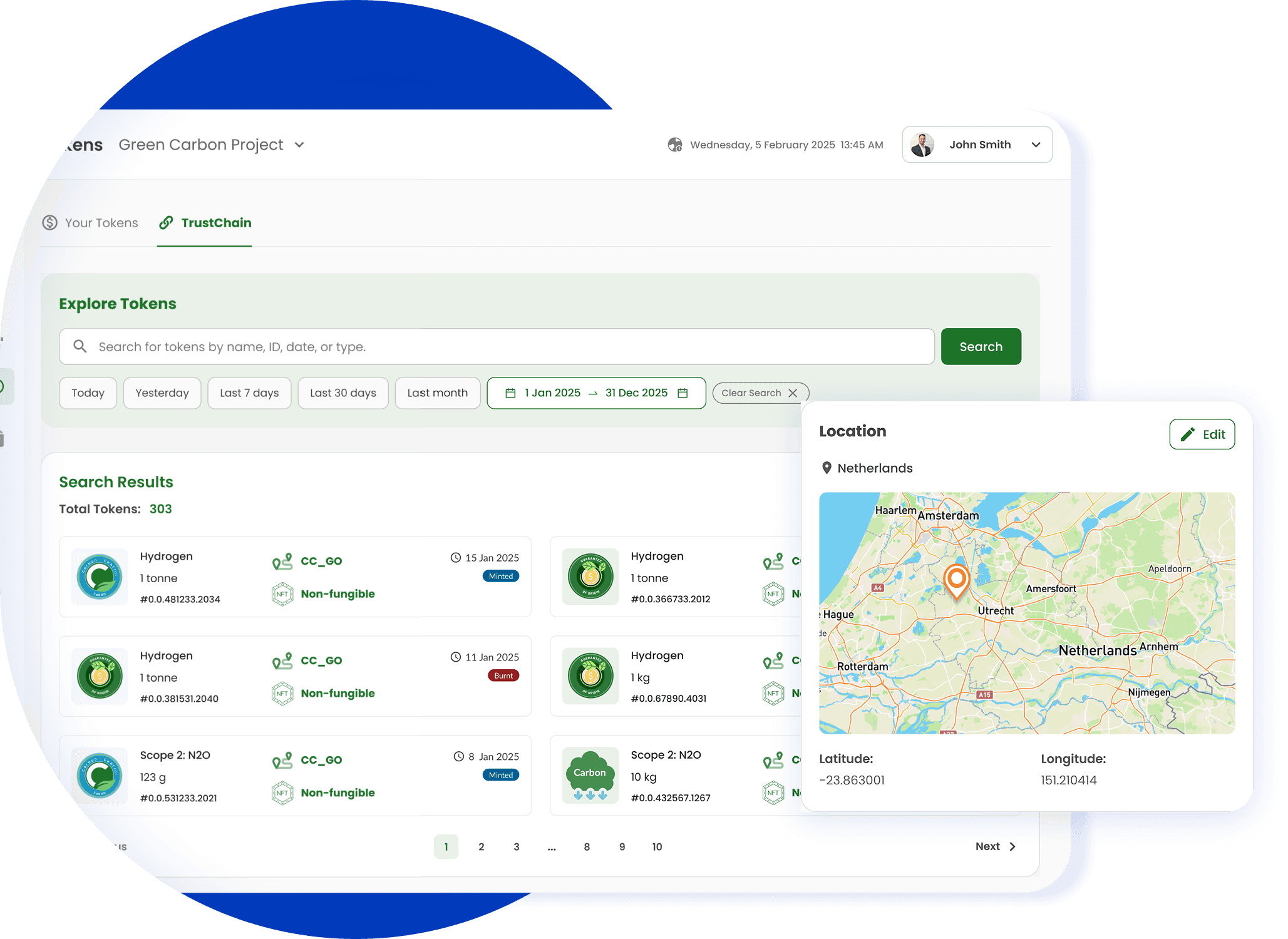
Fuel Central is NoviqTech's data infrastructure platform for low-carbon fuel supply chains. The platform supports alignment with all major CoC models – including Identity Preservation, Physical Segregation, Controlled Blending, Mass Balance, and Book & Claim – to help businesses meet their sustainability goals.
For RFS compliance specifically, the relevant capabilities are:
Capability | What It Addresses |
Models feedstock intake, production batches, and carbon intensity in a single structured environment. | |
Automated chain-of-custody records | Tracks fuel volumes from feedstock through to offtake, with blockchain-backed tamper-proof controls. |
Proof of Sustainability generation | Produces audit-ready compliance documentation aligned with certification schemes, exportable on demand. |
Multi-facility governance | Manages multiple production pathways and facilities in one platform, relevant as volume obligations scale. |
Producers can model operations digitally through manual data entry or integrations with meters and sensors, without requiring fully automated infrastructure to get started.
The platform is already interoperable with RED III, CORSIA, ISCC, RSB, ReFuelEU Aviation, and more, meaning compliance work built for RFS doesn't need to be rebuilt from scratch for other markets.
What Biofuel Producers Should Do Next for RFS 2026–2027 Compliance
The EPA's "Set 2" rule sets volume mandates at historic levels. Biodiesel and renewable diesel production must increase by over 60% relative to 2025. The RIN system remains the central compliance and financial mechanism. And with the 2028 import penalty signalled, feedstock origin is becoming a forward compliance variable producers should begin preparing for now.
What producers and compliance teams should be evaluating now is whether their current data systems can carry the compliance load the upcoming years will place on them, and whether those systems will hold up when the signalled 2028 import rules come into force.
That evaluation is a practical one and it starts with understanding what structured data infrastructure looks like in your specific operating environment. Our team works through that with you directly. Book a discovery call.
More Regulations