6 mins read

Carbon Offset Fraud, EU Greenwashing Bans, and Double-Counted Credits: The Carbon Market Compliance Risks That Are Now Legally Enforceable
Where Data Gaps Introduce Risk
In carbon markets, the gap between a claim and its evidentiary foundation is where reputational and regulatory risk accumulates. Where data is incomplete, methodology inconsistent, or claims extend beyond what evidence can support, markets become vulnerable to the kind of scrutiny that erodes confidence across the entire system.
The numbers illustrate the scale of that vulnerability. According to MSCI, 43% of all carbon credits retired in 2024 came from low-rated projects. An analysis by Senken found that more than 68% of DAX40 companies that purchased carbon credits ended up supporting projects with no verified climate impact. Research by the Max Planck Institute concluded that 84% of carbon credits in circulation carry high integrity risk.
These are not fringe findings. They describe the current baseline of a market worth over €1 billion annually, and they help explain why enforcement activity is increasing.
A Shifting Enforcement Scenario
In October 2024, the FTC, CFTC, SEC, and DOJ launched parallel actions against CQC Impact Investors LLC for fraudulently generating approximately six million carbon offsets. In Brazil, Operation Greenwashing, launched by the Federal Police in June 2024, resulted in charges against 31 individuals connected to an alleged R$180 million REDD+ scheme, where falsified land records were used to generate non-existent credits.
Shell's "carbon neutral" LNG campaign has come under scrutiny following investigations showing that rice-farming offset projects it relied on had no verified activity on the ground, with local Chinese agricultural authorities confirming they held no records of any project taking place.
In Germany, Apple lost a case in August 2024 before the Frankfurt Regional Court, where the court found that its carbon neutrality claims were misleading because the underlying offset projects were guaranteed only until 2029, well short of what consumers could reasonably expect given standard net-zero timelines. Greenwashing cases have nearly doubled globally since 2020, reaching approximately 2,700 active cases in 2025.
The regulatory environment is responding. The EU's Green Transition Directive, adopted in March 2024, bans generic "climate neutral" claims from September 2026. Germany's Federal Court of Justice now requires companies to specify whether neutrality is achieved through emissions reduction or compensation. The EU's Green Claims Directive continues through legislative process, imposing verification requirements on environmental claims before they can be made.
Across jurisdictions, claims that are not supported by structured, verifiable data carry growing legal and reputational exposure.

How Carbon Markets Function
Carbon markets allow organisations to trade credits, where each credit typically represents a verified reduction or removal of one tonne of CO₂ equivalent. They operate in two primary forms:
Market Type | How It Works | Oversight |
Compliance markets | Emissions caps set by regulation; companies buy credits if they exceed their limit. | Government-regulated, enforceable. |
Voluntary markets (VCM) | Companies purchase offsets beyond regulatory requirements, often to support net-zero claims. | Largely self-regulated; governance evolving. |
The voluntary carbon market is where most corporate sustainability claims are anchored and where data quality questions are most acute. A credit is only as credible as the methodology behind it, the verification process applied, and the traceability of its journey from issuance to retirement.
When any of those three elements is weak, the claim resting on it becomes difficult to defend.

The Specific Function of Guarantee of Origin
Guarantee of Origin (GO) frameworks certify how and where a unit of energy was produced, based on defined criteria and verified data.
Within a broader integrity framework, GO schemes play a specific and well-defined role of issuing a verified certificate that records the source, location, and production method of an energy unit and enabling the holder to make a substantiated claim about its origin, independently of the physical energy flow.
GO frameworks are not a single global system. They operate differently by jurisdiction and, critically, by energy type. The table below maps where GO schemes currently operate, what they cover, and which instrument applies.
Jurisdiction | Scheme | Administered By | Covers | Liquid Fuels? |
EU (28 countries) | National registries via AIB/EECS | Renewable electricity, gas, hydrogen, heating & cooling | No – ISCC, RSB, and RED III apply | |
United Kingdom | Renewable electricity | No | ||
Australia | Renewable electricity, electrolytic hydrogen | Not yet – consultation open until April 2026 | ||
Global (50+ countries) | IREC Standard | Renewable electricity | No | |
United States | State-level bodies | Renewable electricity | No |
One consistent pattern across all jurisdictions: GO-equivalent frameworks currently cover electricity and gas, not liquid fuels. For biofuels, SAF, and renewable diesel, the equivalent certification function is served by schemes such as ISCC, RSB, and the sustainability criteria under RED III. The underlying logic is the same – verified origin, defined methodology, traceable record – but the regulatory instrument differs by jurisdiction and fuel type.
In all cases, the certificate records what was produced, how, and with what emissions intensity. It does not determine how that data may be used in a claim, what comparison is drawn, or whether the scope of the claim matches the scope of the certificate. Under the EU's Green Claims Directive, environmental claims must be substantiated with specific, verified evidence before they can be made public. A GO certificate satisfies the data provenance requirement. The organisation still carries responsibility for how that data is applied, what it is compared against, and whether the claim accurately represents methodology and scope.
A note on the Australian context: Australia's GO scheme launched in November 2025, currently covering renewable electricity and hydrogen from electrolysis. Coverage of low-carbon liquid fuels, including renewable diesel and sustainable aviation fuel, is under active government consultation and expected to come into scope in 2026. For producers operating in Australia, the underlying data requirements (emissions intensity, feedstock traceability, chain-of-custody records) are worth building now, ahead of formal certification pathways opening. See NoviqTech's full breakdown of the Australian GO scheme.
Traceability as Continuity of Evidence
GO frameworks establish what a product is at the point of creation. Traceability determines whether that information stays intact and accountable as it moves through the system.
Without traceability:
Certificates can be double-counted or misapplied across jurisdictions
Transfers cannot be independently audited
Claims become detached from underlying project data
The Shell case is instructive here. Credits were issued, audited, and retired through formal processes, yet the underlying project activities either did not occur or could not be verified. The mechanism functioned; the evidentiary record behind it did not hold up.
Traceability addresses this by ensuring that every transfer, retirement, and associated claim is linked to a structured, auditable record that can be examined after the fact.
Standards Are Evolving to Meet the Gap
The Integrity Council for the Voluntary Carbon Market (ICVCM) introduced its Core Carbon Principles (CCPs) as a global quality benchmark for carbon credits. As of late 2025, credits from CCP-Eligible programs represent approximately 38% of the market. Only around 4% of total 2024 issuance carries full CCP approval, and CCP-approved credits command a roughly 25% price premium over non-approved equivalents, reflecting growing market recognition that quality is not uniform across projects.
At COP29 in Baku, negotiators finalised the Article 6 rulebook for international carbon trading, a framework in negotiation since the Paris Agreement in 2015. Article 6.4 establishes a UN-supervised carbon market open to both countries and corporations, with transparency requirements and review mechanisms designed to address double-counting and data inconsistency at a systemic level.
The direction across both voluntary and compliance markets is consistent. Structured data, independent verification, and traceable records are becoming the baseline expectation rather than a “premium” characteristic.
Operational Requirements for Credible Claims
For organisations operating in carbon markets, the integrity of a sustainability claim is inseparable from the quality of the data that underlies it.
Requirement | Relevance |
Structured origin records | Establishes the factual basis for any claim at the point of production |
Consistent methodology | Enables comparison, audit, and external assurance |
Traceable chain of custody | Links credits from issuance to retirement without gaps |
Audit-ready documentation | Supports regulatory review, investor due diligence, and certification |
The EU's CSRD is tightening assurance requirements on corporate sustainability disclosures. German courts have already ruled that claims must specify whether neutrality comes from reduction or compensation. The FTC's Green Guides are under revision. Across jurisdictions, the threshold for what constitutes a defensible claim continues to rise.
Transparency in this context means being able to show what was measured, how it was calculated, and where the supporting records are held.
Structuring Verifiable Carbon Data
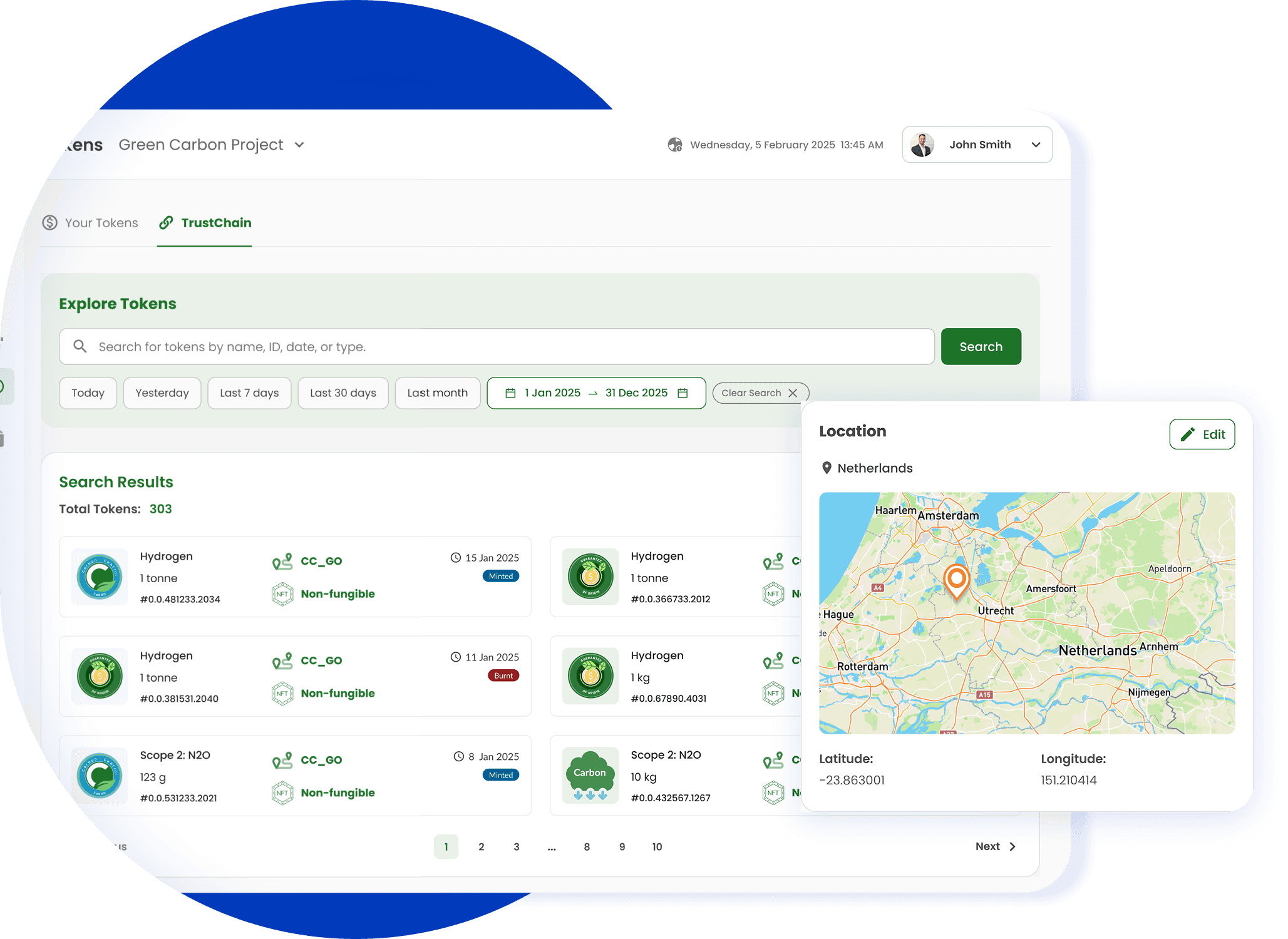
NoviqTech's Carbon Central platform structures production, energy, and emissions sustainability data into traceable, audit-ready records. It supports organisations in preparing for certification, external reporting, and regulatory review, with chain-of-custody documentation that connects data to claims without requiring manual reconciliation across disconnected systems.
Credibility in carbon markets is established long before a claim is made. If you would like to understand how Carbon Central supports that process for your organisation, our team is available to walk you through it. Book a Discovery Call.
More Circular Economy