6 mins read

GHG Protocol Updates: What Companies Should Expect by 2027
The Greenhouse Gas Protocol, the leading global standard for corporate emissions accounting, is undergoing its first comprehensive revision of the full framework in over a decade.
The Greenhouse Gas Protocol provides the framework used by companies, regulators, and disclosure initiatives to classify emissions into Scope 1 (direct emissions), Scope 2 (purchased energy), and Scope 3 (value-chain emissions). Many reporting frameworks and regulations rely on these definitions when companies disclose climate data.
Since the Corporate Accounting and Reporting Standard was published in 2004 (and the Scope 3 Standard in 2011), the global scenario has shifted dramatically. Developments like the rise of the Science Based Targets initiative (SBTi), the surge of net-zero pledges, new mandatory climate disclosure laws, and widespread corporate adoption have all put new demands on GHG accounting.
In response, GHG Protocol initiated a comprehensive review process (with public feedback gathered in 2022–2023) to update its Corporate Standard, Scope 2 Guidance, Scope 3 Standard, and supporting guidance.
The goal is to ensure these standards remain rigorous and credible, helping businesses measure and track emissions in line with the Paris Agreement’s 1.5°C goal. Importantly, the revised standards aim to harmonise with emerging disclosure rules worldwide, so that companies can use one foundation for various regulatory and investor requirements.
These updates are being developed through a global, inclusive process. GHG Protocol has convened a new independent Standards Board, Steering Committee, and technical working groups with members from business, NGOs, academia, and government.
The timeline is deliberate. Draft revisions for the Corporate Standard, Scope 2 Guidance, and Scope 3 Standard are expected to continue through 2026, with final standards anticipated around 2027 following multiple consultation rounds.
Alongside these revisions, the GHG Protocol released a new Land Sector and Removals Standard in January 2026, providing the first comprehensive guidance for companies reporting emissions and carbon removals from land use and agriculture. The standard will take effect in 2027.
In the interim, companies should not wait idly. Many of the proposed changes reflect practices that regulators, investors, and leading companies are already moving toward.

Key Areas Under Review
Although the full details are still being finalised, several core updates have already emerged. These include changes to how emissions are defined, measured, and reported across scopes 2 and 3.
Organisational Boundaries
One of the proposed updates concerns how companies set their organisational boundaries for emissions reporting. At present, businesses can choose between the equity share method or financial or operational control. This flexibility has led to inconsistencies in how emissions are consolidated.
The updated guidance may require companies to align their GHG inventory boundaries with financial reporting practices such as IFRS or GAAP. This would improve consistency and make it easier to compare emissions across companies.
Other expected updates include:
Clearer rules for recalculating base year emissions after mergers or divestitures.
Guidance on reporting data uncertainty and data sources.
Principles to govern future carbon removal reporting, including permanence and conservativeness.
Scope 2 (Purchased Electricity)
Electricity-related emissions reporting is expected to become more detailed and accurate.
Companies may need to match renewable energy purchases with electricity consumption more closely in time, potentially moving toward hourly matching rather than annual matching.
Renewable energy contracts may need to reflect both the location and timing of actual electricity use.
Certificates such as Renewable Energy Certificates (RECs) may need to align more closely with when and where electricity is consumed, potentially requiring temporal and geographic matching.
A project-based method may allow companies to account for avoided emissions using marginal grid data.
It is expected that the new rules will clarify how to account for on-site energy systems such as solar panels and batteries.
These changes aim to reduce reliance on certificates alone and encourage investments in renewable energy that more closely reflect physical electricity use.
Scope 3 (Value Chain Emissions)
Scope 3 emissions often represent the largest share of a company’s total footprint. The updated standard will likely introduce stronger requirements for how these emissions are reported and managed.
A revised Scope 3 Standard is expected to enter public consultation during 2026 as part of the broader GHG Protocol revision process.
Expected updates include:
Introducing clearer materiality thresholds for Scope 3 categories.
Encouraging a shift from spend-based estimates toward supplier-specific or activity-based data where feasible.
Requiring disclosure of data quality, including the proportion of supplier-specific, secondary, and estimated data.
Encouraging companies to develop plans for improving data accuracy and collaborating with suppliers to reduce emissions.
Providing new guidance for sectors such as biofuels, forestry, and carbon removals, aligned with the new Land Sector and Removals Standard.
These changes aim to increase transparency, drive supplier engagement, and improve the reliability of Scope 3 inventories.
Market Instruments and Climate Actions Outside the Inventory
The GHG Protocol is also developing new guidance for climate actions that fall outside a company’s direct emissions inventory. This includes mechanisms such as renewable energy certificates, carbon credits, and sustainable aviation fuel certificates, with a focus on how their emissions impact is quantified and reported separately from core Scope 1, 2, and 3 inventories.
Currently, there is little consistency in how these actions are reported. Some companies mix them into core Scope 1, 2, or 3 totals. Others report them separately, using different assumptions.
To address this gap, the GHG Protocol is developing a new Actions and Market Instruments (AMI) framework. Early consultations on related accounting methods concluded in early 2026, and draft guidance is expected to follow.
Under the proposed approach:
Companies will report market instruments separately from their Scope 1, 2, and 3 inventories.
Claims such as carbon neutral or net-zero will require clear documentation of the mitigation actions behind them.
Avoiding double counting will be a priority, particularly for offsets and other third-party certificates.
This approach is designed to improve transparency and ensure that climate-related claims reflect measurable mitigation outcomes.

What These Changes Mean for Reporting and Data Management
The revisions will have significant implications for how businesses collect, manage, and report emissions data.
More Complete Emissions Inventories
With stricter Scope 3 requirements and fewer exclusions allowed, companies will need to account for emissions across their entire value chain. This includes upstream activities such as raw material sourcing and manufacturing, as well as downstream impacts like product use and disposal.
In sectors such as green fuels or chemical recycling, companies will need to consider emissions not only from production but also from feedstock, transport, and end-of-life treatment. As a result, inventories will be more complete and more closely aligned with how products and services perform in the real world.
Increased Focus on Data Quality and Traceability
The move away from more generic emission factors to supplier-specific data places new emphasis on traceability. Companies will benefit from systems to track emissions origin and how they were calculated.
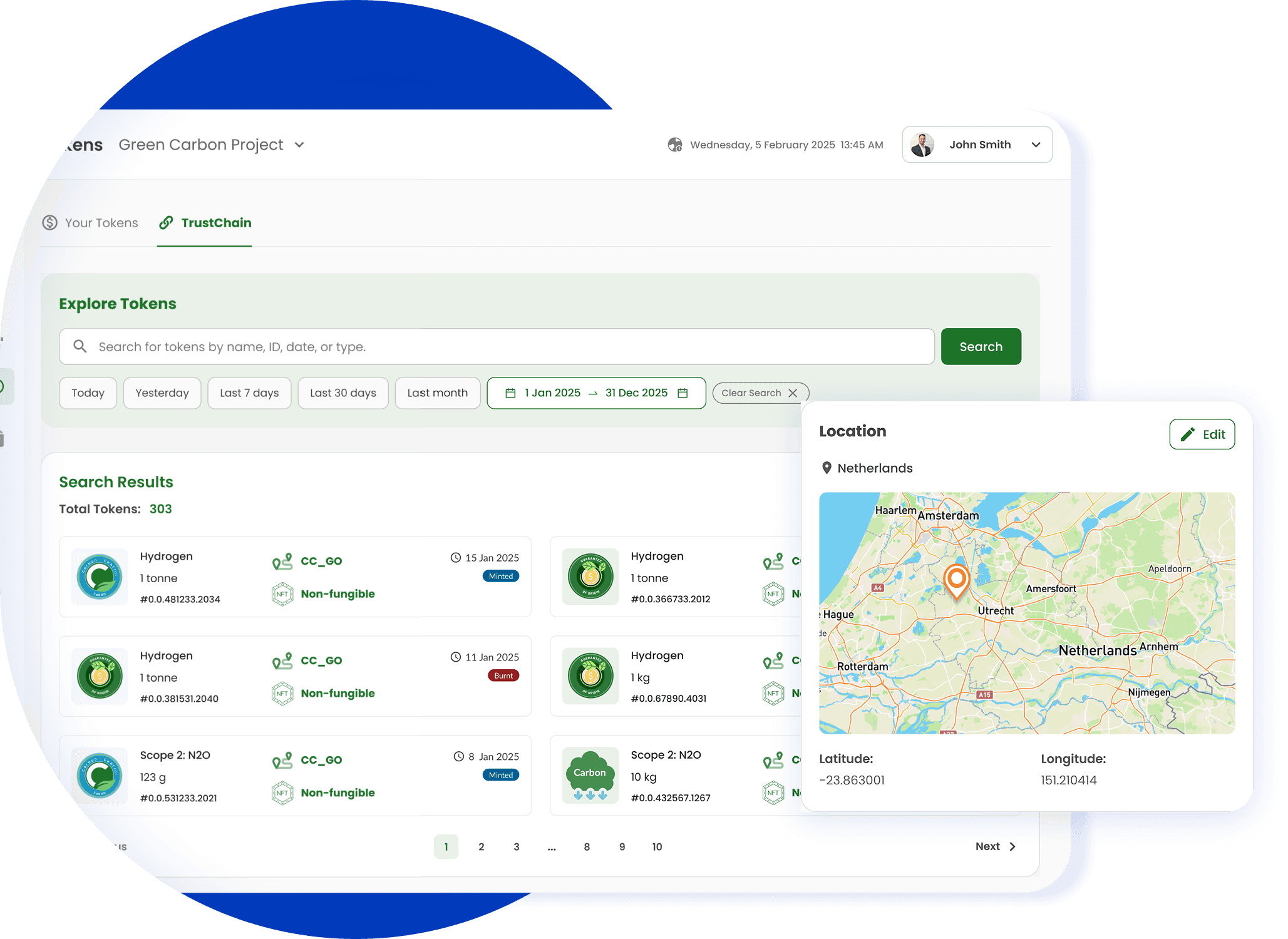
This may involve tools such as digital product passports, blockchain-based records, and detailed life cycle assessments. Sustainability teams will need to work closely with procurement, operations, and suppliers to ensure the data collected is accurate and verifiable.
Alignment with Global Policy Trends
These updates are not happening in isolation. They are designed to work alongside new climate disclosure laws already being introduced across multiple countries.
Australia
From 2025, large companies in Australia must disclose Scope 1, 2, and 3 emissions using internationally recognised standards. The GHG Protocol is one of the frameworks referenced in these new requirements. The revised standards could help companies meet their legal obligations and prepare more robust financial filings that include climate data.
European Union
The EU’s Corporate Sustainability Reporting Directive (CSRD) requires companies to measure and disclose emissions across the value chain. The GHG Protocol remains a key methodological reference for many of these disclosures.
Global Convergence
Beyond Australia and the EU, other jurisdictions including the UK, Canada, Japan, and South Africa are aligning with international frameworks such as ISSB sustainability disclosure standards. These frameworks rely on GHG Protocol definitions and structure.
Using updated GHG Protocol standards will allow companies to meet climate disclosure expectations across multiple jurisdictions with a consistent methodology.
What Businesses Should Do Now
Many organisations preparing for CSRD, ISSB, or Australia’s climate disclosure rules are already aligning their internal data systems with the evolving GHG Protocol framework.
Assess Current Data Systems
Review how your organisation currently collects emissions data. Identify where estimates are used and where supplier or activity-based data is lacking.
Evaluate whether your systems can handle more granular electricity data, supplier-level Scope 3 data, and separate reporting of offsets or certificates.
Begin Supplier Engagement
Start conversations with key suppliers, especially those in emissions-intensive categories. Ask whether they can share primary data or support joint initiatives to improve data quality.
Consider updating contracts to include data reporting obligations or incentives for emissions improvements.
Build Internal Capacity
Ensure your teams understand how the GHG Protocol is evolving. Train staff on life cycle assessment methods, emissions calculation approaches, and climate disclosure requirements.
Designate owners for each emissions category and establish internal review processes to improve data accuracy.
Monitor the Process
The update process is ongoing. Public consultations, draft standards, and technical updates will continue throughout 2026.
Companies can follow developments through the GHG Protocol consultation process and review draft proposals as they are released.
Looking Ahead
These changes reflect a broader shift in how emissions data is used across supply chains, markets, and financial systems.
Customers and investors increasingly favour companies that can demonstrate credible climate performance. Banks and large buyers are beginning to prioritise suppliers with science-based targets and transparent carbon data.
A strong emissions accounting system is becoming a strategic capability. Companies that can measure their footprint accurately, track improvements, and support claims with reliable data will stand out.
The growing focus on traceability and audit-ready records will also require closer collaboration across functions. Procurement, product design, operations, and finance will need to align around a shared view of emissions performance.
Carbon Central can support this transition by collecting emissions data in real time, securing it for verification, and structuring it for automated reporting. This helps teams focus on emissions reduction rather than managing spreadsheets.
The next chapter of the GHG Protocol is shaping a more consistent and transparent foundation for measuring climate impact and supporting the global transition to a low-carbon economy.
Frequently Asked Questions About the GHG Protocol Updates
When will the updated GHG Protocol standards be released?
Draft revisions are expected to continue through 2026, with final standards likely around 2027 following multiple consultation rounds.
What parts of the GHG Protocol are being updated?
The update covers the Corporate Accounting Standard, Scope 2 Guidance, Scope 3 Standard, and new guidance on climate actions and market instruments.
Why are Scope 2 rules being revised?
Current rules allow annual matching of renewable energy certificates with electricity consumption. Proposed changes may require more granular matching by location and time to improve accuracy.
Do companies need to change their reporting now?
No immediate changes are required. However, companies are encouraged to review data systems and prepare for more granular electricity data and supplier-specific Scope 3 reporting.
More Circular Economy