7 mins read
How Sustainable Fuel Producers Are Solving the Compliance Stack in 2026
Fuel producers working in biofuels, sustainable aviation fuel (SAF), renewable diesel, and biogas are managing more complexity than ever before. Datasets are growing. Certification requirements are tightening. And regulators across different jurisdictions rarely agree on definitions, thresholds, or paperwork formats.
The teams caught in the middle of this complexity are sustainability teams. They are expected to validate every claim, track every litre from origin to end use, and still find time to submit quarterly reports on schedule.
Below are five of the most pressing operational challenges facing these teams in 2026, with practical solutions for each.
1. Data overload and system fragmentation
Feedstock records sit in one spreadsheet. Production yields live in another. Emissions data exists somewhere in a legacy system that only one person knows how to access. This is not an edge case. According to research published by the World Economic Forum, close to half of all large companies still manage ESG data in spreadsheets, a method that creates version conflicts, limits scalability, and introduces human error at every step.
When a compliance deadline arrives, teams spend hours reconciling data from four different sources. The report they produce reflects the past, not the current state of operations.
What to do
Centralise and automate sustainability data management. The solution for data overload is a unified platform that consolidates all sustainability metrics – production volumes, energy use, carbon intensity, supply chain records – in one place. For example, Fuel Central adapts to your data maturity: it can integrate directly with your existing systems or accept manual uploads when automation isn’t feasible. Either way, it eliminates fragmented reporting, numerous spreadsheets, and the pain of reconciling multiple data sources.

2. Traceability gaps and documentation failures
Regulations governing sustainable fuels require producers to demonstrate an unbroken chain of custody from feedstock to final delivery. In practice, the documentation needed to prove that chain often lives in email threads, physical folders, or shared drives with no clear structure.
The stakes of getting this wrong are significant. California's Low Carbon Fuel Standard (LCFS) is one of the most lucrative compliance markets in North America. LCFS credits have traded at prices exceeding $200 per metric tonne. Producers who cannot demonstrate a complete chain of custody risk losing those credits entirely. Under the EU's Renewable Energy Directive (RED III), importers face similar consequences if documentation does not meet audit standards.
What to do
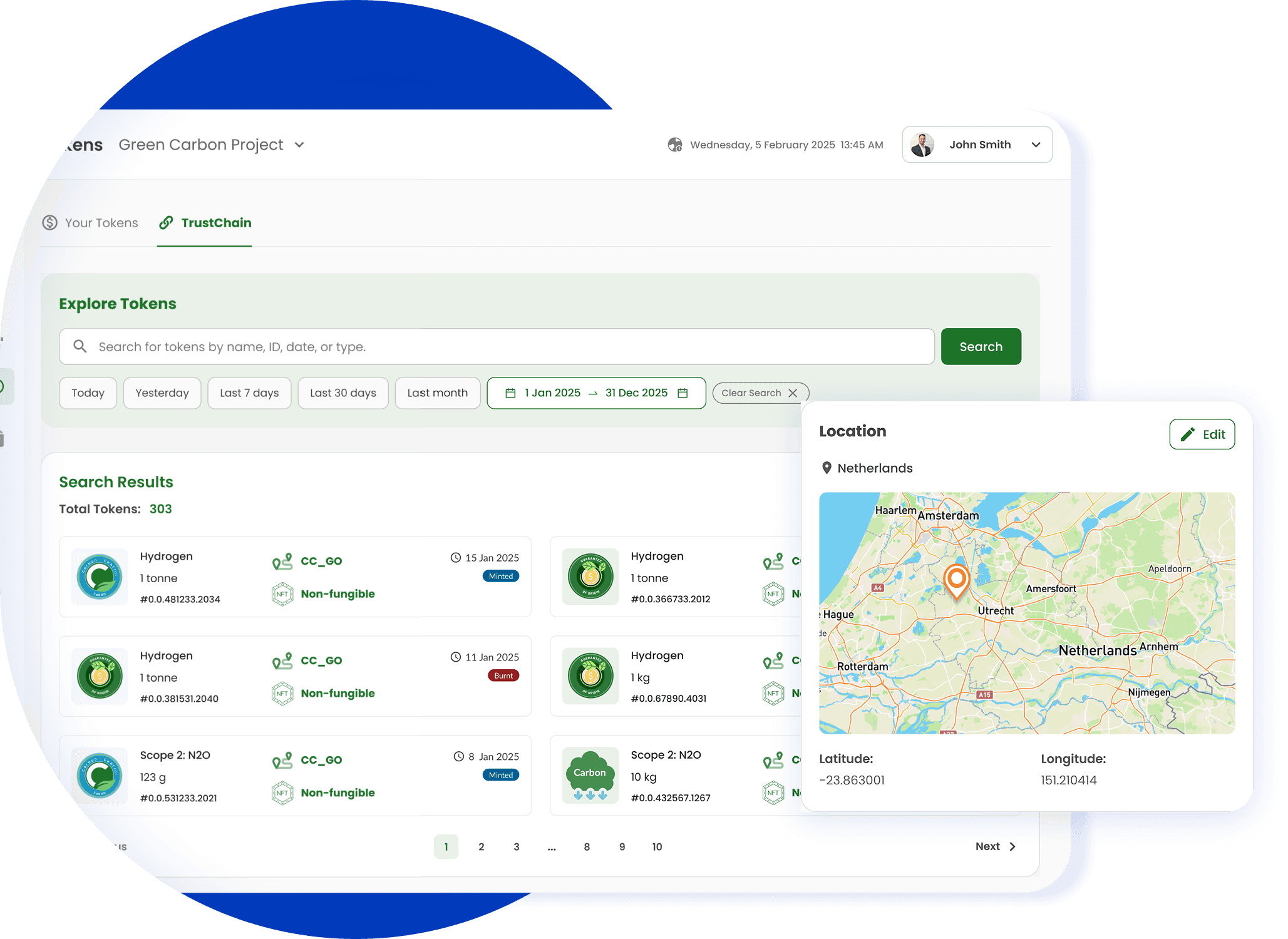
Digitise the entire chain of custody using blockchain or distributed ledger technology (DLT). Each batch of fuel and its associated sustainability attributes get recorded on a tamper-proof ledger. Any auditor, buyer, or regulator can verify the record instantly, without chasing emails or digging through filing cabinets.
Fuel Central, Noviqtech's traceability platform, uses blockchain-enabled tracking so that Proof of Sustainability (POS) documents are uploaded once and cryptographically linked to the relevant batch. The system then manages mass balance and other chain-of-custody models automatically, adjusting inventory records as fuel moves through the supply chain. Request a walkthrough.

3. Lifecycle emissions calculation and GHG compliance
Sustainable fuel producers must show that their products reduce greenhouse gas (GHG) emissions significantly compared to fossil fuel alternatives. RED III sets the bar at a minimum of 70% lifecycle emission savings for existing installations and 80% for new ones. Calculating lifecycle emissions accurately requires data from feedstock cultivation, transportation, conversion processes, energy consumption, and end-use combustion.
The methodologies also differ by jurisdiction. A fuel that meets EU criteria may need to be recalculated entirely to qualify under California's LCFS or under CORSIA, the aviation sector's international carbon offset scheme. Teams often run these calculations separately, using consultants or standalone tools like GREET or Biograce, which are not connected to live operational data. The result is compliance figures that may not reflect what is happening on the production floor today.
What to do
Integrate LCA calculation directly into daily operations software, so that carbon intensity (CI) figures update as new data comes in. When a feedstock supplier changes or energy consumption shifts, the compliance picture updates immediately, rather than at the next quarterly review.
Fuel Central includes a digital twin modelling layer that tracks feedstock, process energy, and transportation inputs to calculate CI continuously. If a SAF producer using the platform was evaluating a new batch of used cooking oil from a more distant supplier, the tool could show that higher transport emissions would reduce their GHG savings from 82% to 75%, which would still meet the RED III threshold but would have narrowed their margin considerably. That insight would allow them to find a closer supplier before any commitment was made.
4. Carbon credit confusion and the double-counting problem
As sustainable fuel operations grow, more producers are generating or purchasing carbon credits, whether that means LCFS credits, Renewable Identification Numbers (RINs) under the US Renewable Fuel Standard, or voluntary carbon offsets. The accounting rules around these credits are not straightforward, and teams frequently make errors that can have serious consequences.
The core risk is double-counting: claiming the same emissions reduction in two different systems. For example, if a producer generates a carbon credit for a batch of low-carbon fuel, they cannot also count that same reduction in their corporate GHG inventory. If a SAF batch is sold to an airline and the airline claims the reduction under CORSIA, the producer cannot then sell a voluntary offset for the same batch. Article 6 of the Paris Agreement is making these rules stricter at the international level, with requirements for Corresponding Adjustments that will eventually flow down to corporate accounting practices.
On top of this, different markets only accept credits that meet specific standards. Not every voluntary carbon credit qualifies under CORSIA. Not every offset accepted in one country's compliance market is recognised in another's.
What to do
Implement a system that tracks each unit of environmental attribute from issuance through retirement. The system should flag any attempt to apply the same attribute to more than one claim. Teams should also build internal policies that clarify, in writing, which credits are reserved for which reporting framework before any credit is generated or purchased.
This is an area where Fuel Central's compliance mapping layer adds direct value, by showing teams which attributes have already been claimed and which remain available. Getting this right protects both the financial value of credits and the reputational credibility of sustainability claims.
5. Reporting fatigue and certification overload
A typical biofuels producer in 2026 might simultaneously be managing ISCC certification, an RSB audit, national blending mandate reporting, a corporate ESG disclosure aligned to GRI Standards or ISSB, and quarterly investor reporting. Each framework asks for slightly different data cuts. Each has its own deadlines and documentation requirements. None of them talk to each other.
The result is that sustainability professionals spend most of their time preparing reports rather than acting on the data inside them. A 2023 survey by PwC found that 74% of sustainability leaders reported that data collection and reporting consumed more time than the analysis and action that should follow. In a sector where the regulatory bar is rising every year, that imbalance is unsustainable.
What to do
Adopt a collect-once, report-many approach. Enter data into a single master system, and use software to populate the different report formats and audit checklists automatically. The platform should maintain a mapping of your operational data to each framework, so that producing an ISCC-compliant Proof of Sustainability, a mass balance report, and a CSRD-aligned disclosure all draw from the same underlying records.
Real-world example: A mid-sized biodiesel producer was juggling five different certifications and reporting standards: ISCC for Europe, a domestic mandate, a customer-required CSR report, plus internal KPI reporting to investors, and a safety/environment ISO certification. After implementing a sustainability software platform, they experienced a transformation. They now enter data (feedstocks, outputs, emissions) into one system. For ISCC, the system compiles the needed documents (traceability, GHG calculations) in an audit-ready package – the last ISCC audit took them half the preparation time compared to before.
For the national mandate, the same data is used to auto-fill the government report forms. Their sustainability reporting person can easily pull a custom report for the investor presentation, selecting the relevant metrics with a few clicks.
The regulatory bar will keep rising
Traceability requirements will tighten as regulators introduce more granular chain-of-custody rules. LCA methodologies will evolve as new feedstocks enter the market. Carbon credit accounting will get more complex as Article 6 implementation accelerates. And the volume of sustainability reporting frameworks is increasing, not decreasing.
What is changing is the quality of the digital tools available to meet these demands. Platforms like Noviqtech's Fuel Central are purpose-built for sustainable fuel operations. They bring together data management, traceability, lifecycle emissions calculation, credit accounting, and multi-framework reporting into one connected system.
Teams that implement these tools now are already seeing the difference: fewer errors, faster audits, and compliance processes that run in the background rather than consuming the entire team.
Reach out for a discovery call and we’ll work with your team to implement a solution tailored to your fuel supply chain – whether it’s end-to-end traceability, production and emissions tracking, or streamlined reporting workflows.
More Supply Chains